Beaches & Swimming
Distance at Sea Is Longer Than It Looks From Shore
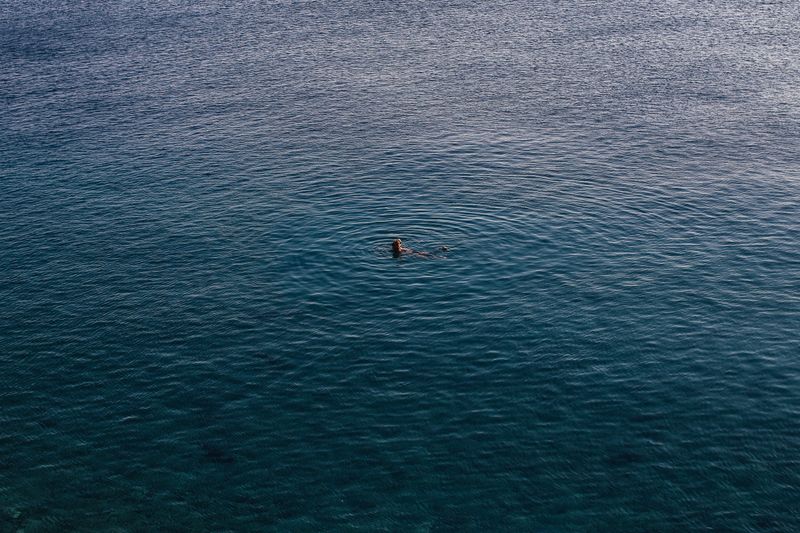
Open water compresses apparent distance, removes the pacing cues a pool provides and adds drift, so a swim that looks short routinely takes far longer.

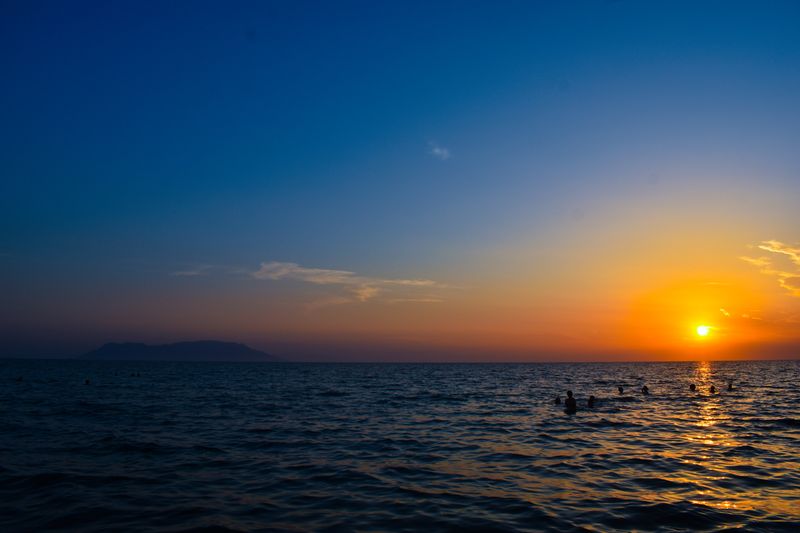
A buoy, a rock or the far side of a bay looks close from the beach. Swimmers who set out for it regularly find the crossing takes several times as long as expected.
The eye compresses distance over water
Judging distance depends on intermediate objects between the viewer and the target, and open water provides none at all.
A featureless surface therefore reads as shorter than it is, and the effect increases the flatter and clearer the conditions are.
Height makes it worse. Looking down from a cliff or a promenade flattens the perspective further and makes an offshore object appear closer still.
A pool gives feedback that the sea does not
In a pool, the wall arrives at a known interval, and pace, distance and effort are all measured continuously without any conscious effort.
In open water there is nothing to count, so swimmers regularly start faster than they can sustain and only discover it well out from shore.
The absence of a wall also removes the rest that a turn provides, which changes the physiological demand of the same nominal distance.
The line swum is longer than the line intended
Without lane markings, most swimmers curve, and the curve is consistent for each individual rather than random.
Sighting corrects it, but each sighting costs a small amount of speed and rhythm, so the actual path is longer and slower than a straight-line estimate.
Add any cross-current and the swimmer is being carried sideways throughout, which lengthens the route again without any subjective sense of it happening.
Conditions change the arithmetic completely
Chop breaks stroke rhythm and interrupts breathing, and a swim into short, steep waves can take substantially longer than the same distance in flat water.
Wind against tide produces exactly those conditions, and it can develop within an hour on water that was smooth when the swim started.
The return leg is the one that suffers, since the outward leg is often swum with the conditions and creates a false impression of the pace available.
How to make the estimate honest
Measuring the intended route on a map beforehand is a corrective, because the number is almost always larger than the visual impression suggested.
Swimming parallel to the shore rather than out and back keeps the exit close throughout and removes most of the consequence of a bad estimate.
Where a crossing is genuinely the point, a boat or a kayak alongside changes the risk profile entirely, which is why organised crossings are always accompanied.
Questions readers ask
Can a ship see a swimmer in the channel?
Often not in time. A low, dark head in choppy water is hard to spot even from a small boat, and large vessels have a substantial blind area ahead of the bow plus stopping distances measured in ship lengths.
Are harbour swimming bans universal?
No. They are set by individual harbour authorities and vary widely between ports and countries, with some harbours having designated areas and others prohibiting swimming entirely. The harbour office is the authority on its own water.