Beaches & Swimming
Night Swimming Loses the Two Things You Rely On
In darkness a swimmer loses orientation and loses visibility to others, and both failures compound because the usual ways of correcting them stop working.

Swimming in the sea after dark is popular in warm regions and on calm summer nights everywhere. Two specific capabilities disappear, and they are the two that keep a swim manageable.
Orientation collapses without a horizon
Swimmers navigate by lifting the head and sighting a fixed object ashore, correcting continuously for the drift they cannot feel.
At night the shoreline is a dark mass with few distinguishable features, and any lights visible are often well behind the beach rather than on it.
Without a reliable mark, a swimmer drifts steadily and does not know it, which is how people end up a long way along the coast from where they entered.
You become invisible rather than merely hard to see
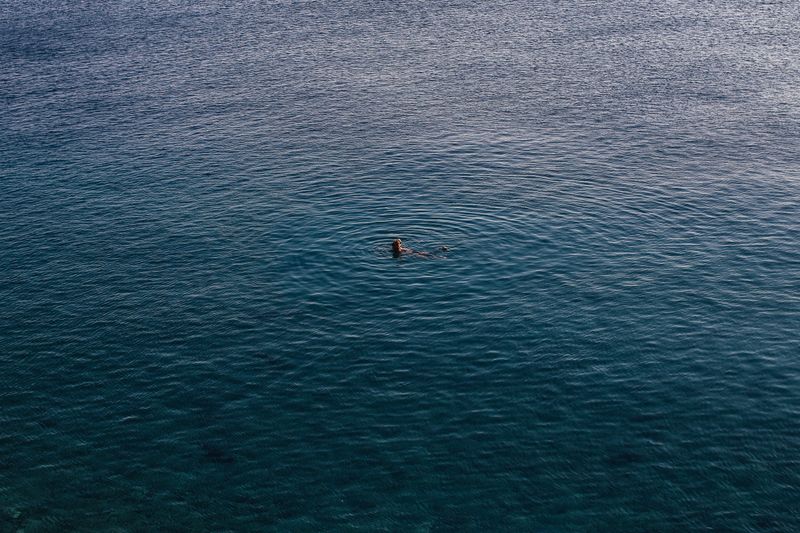
A head in water is difficult to spot in daylight and effectively undetectable at night, both from shore and from any vessel.
Small boats do move close inshore after dark, and their lights indicate their presence to other boats rather than illuminating what is in front of them.
Lit tow floats and a light worn on the head or goggles address this directly, and they also give the person on shore something to track.
Depth perception and shallow hazards
Entering and exiting over unseen ground is the most common source of injury, since rocks, steps and sudden drops are invisible under a dark surface.
Water clarity is irrelevant at night, so a beach known for a clean sandy bottom offers no reassurance about what has washed in since the last visit.
Walking the entry route in daylight the same day is the simple mitigation, and it also fixes the exit point in memory.
Conditions can change unnoticed
An increase in swell or a shift in wind that would be obvious by day is difficult to detect in darkness until it is already affecting the swim.
The tide continues to run, and a change in its direction alters the drift substantially without any visible cue on the surface.
Because feedback is delayed, night swims should be shorter and closer in than the equivalent daytime swim, rather than the same swim in the dark.
What makes it worth doing
Water is often at its warmest relative to the air in the evening, and the sea is frequently calmest after the sea breeze has dropped.
Bioluminescence appears in some waters at certain times of year, triggered by movement, and it is the reason many people swim at night at all.
Doing it from a known, enclosed and shallow location, with someone on the shore and a light on the swimmer, keeps almost all of the appeal and removes most of the problem.
Questions readers ask
Can a ship see a swimmer in the channel?
Often not in time. A low, dark head in choppy water is hard to spot even from a small boat, and large vessels have a substantial blind area ahead of the bow plus stopping distances measured in ship lengths.
Are harbour swimming bans universal?
No. They are set by individual harbour authorities and vary widely between ports and countries, with some harbours having designated areas and others prohibiting swimming entirely. The harbour office is the authority on its own water.