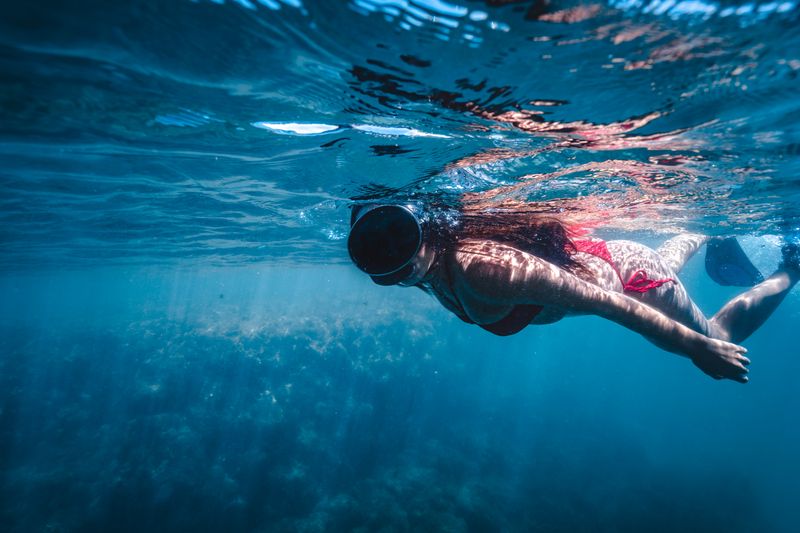
Beaches & Swimming
Getting Used to Cold Water Takes a Season, Not a Weekend
Repeated exposure blunts the initial shock response, but it does nothing for the deeper cooling that follows, and it fades when you stop.

There is a settled way of talking about cold water habituation. It is worth asking how much of it survives contact with the detail.
The argument in brief
- Habituation reduces the initial gasp and breathing response, not deep cooling.
- The adaptation fades within weeks of stopping regular exposure.
- Individual variation is large and some medical conditions change the picture entirely.
What the body does on first contact
Sudden immersion in cold water triggers an involuntary gasp followed by rapid, uncontrollable breathing. Heart rate and blood pressure rise at the same time, which is why the first minute is the critical one. That response is reflexive: it is not a matter of willpower and it does not respond to being expected.
The immediate risk it creates is loss of breathing control, which is a serious problem for someone in water. This is the specific phenomenon that repeated exposure is understood to reduce, and it is worth separating from everything else.
Habituation is real but narrow
Research has generally found that a series of repeated short immersions reduces the size of the initial response. The reduction is substantial in the people studied, and it appears after a relatively small number of exposures.
What it does not change is how quickly the body loses heat once you are in the water for longer. It also does not change the progressive loss of hand and arm function that cold produces over minutes. So habituation addresses the first minute, and the rest of a cold swim remains exactly as demanding as it was.
The other things that do not adapt
Swim failure occurs when cooled muscles and nerves reduce stroke effectiveness until forward progress stops. That process is driven by tissue temperature rather than by familiarity, so experience does not prevent it. Deep body cooling continues after leaving the water, because cold blood from the limbs returns to the core.
When the wind turns, those are physiological facts rather than problems to be trained away, and they set real limits on exposure. Anything involving the management of cooling belongs with qualified instruction and medical guidance rather than with an article.
It fades when you stop
The habituated response is not permanent, and studies indicate it diminishes over a period of weeks without exposure. That is why swimmers who take a winter break describe the first swim back as feeling like starting again. It also means a summer of sea swimming does not carry over usefully into the following spring.
The practical implication is that the adaptation belongs to a regular practice rather than to a person.
People who swim year round are effectively riding the seasonal cooling curve rather than adapting in one step.
Why autumn is the gentle slope
The sea reaches its warmest well after the warmest air and cools slowly through the second half of the year. That slow decline means the temperature change between one week and the next is small for a regular swimmer.
Along that stretch of coast, someone arriving in midwinter without that progression meets the whole difference in a single immersion. This is the mechanism behind the common observation that winter swimmers started in September rather than January. It also explains why a warm spring day with cold water catches out people who have not been in for months.
Prices and opening hours on a seasonal coast are close to fiction outside the season.
Individual variation and where to take it
Body composition, size, age, fitness and sex all affect cooling rates, and the spread between individuals is wide. Cardiac conditions, some medications, alcohol and certain neurological conditions change the risk profile substantially. Anyone with a health condition should be talking to a doctor about cold water rather than reading about it.
Coached groups, qualified open water instruction and local lifeguard or coastguard information are the practical sources. None of this makes any particular water safe on any particular day, which remains a question for local information on the spot.
The takeaway
Habituation buys you the first minute of a cold swim and nothing after it, which is why instruction matters more than practice alone.
Arrive a day early. A coastline rarely rewards a tight schedule.
Questions readers ask
Does a cold shower produce the same adaptation?
Research suggests repeated cold immersion is what blunts the response, and a shower is a partial and less intense stimulus. It is not a substitute for supervised progression in open water, and it does nothing for the deeper cooling problem.
Do experienced cold water swimmers still feel the shock?
Usually less of it, which is the point of habituation, but the response does not disappear and it returns after a break. Experience changes the first minute rather than the physics of losing heat.