Beaches & Swimming
Snorkelling Puts Your Attention Underwater and the Sea Notices
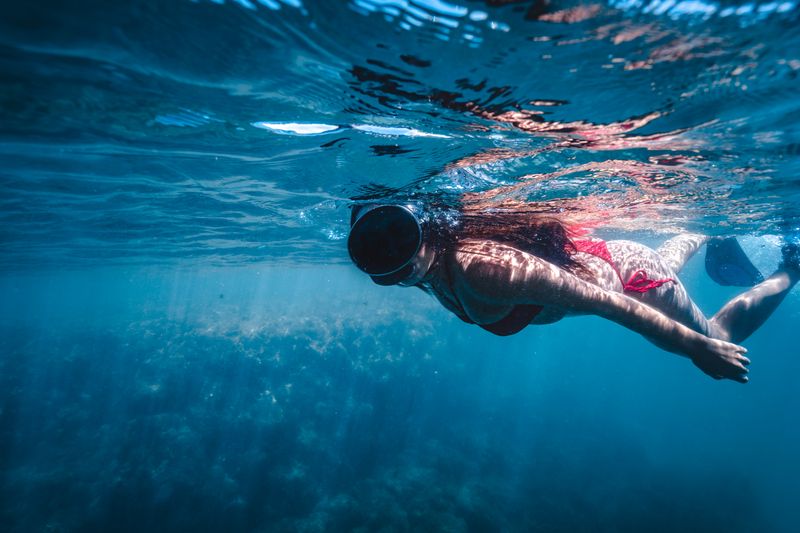
Face down with your ears full, you lose almost every cue about wind, drift and distance, and you can cover a lot of ground without knowing.

The options around snorkelling and situational awareness are set out side by side below, with the conditions that genuinely favour one over the other.
The difference in one place
- Face-down swimming removes the visual and acoustic cues that track position.
- Wind on a floating body pushes it steadily downwind without any sensation of speed.
- Hyperventilating before a breath-hold dive is associated with loss of consciousness underwater.
What changes the moment your face goes in
Looking down at the sea bed removes the horizon, which is the reference most people use without realising it. Water in the ears removes wind noise, breaking waves and voices from the shore, so the acoustic picture disappears too.
The bottom slides past at a rate that says nothing about where you are relative to the beach or the boat. Interesting things underwater are absorbing in a way that reliably swallows twenty minutes without any sense of elapsed time. Every one of those effects works in the same direction: you know less about your position than you did on the surface.
Drift happens without any sensation
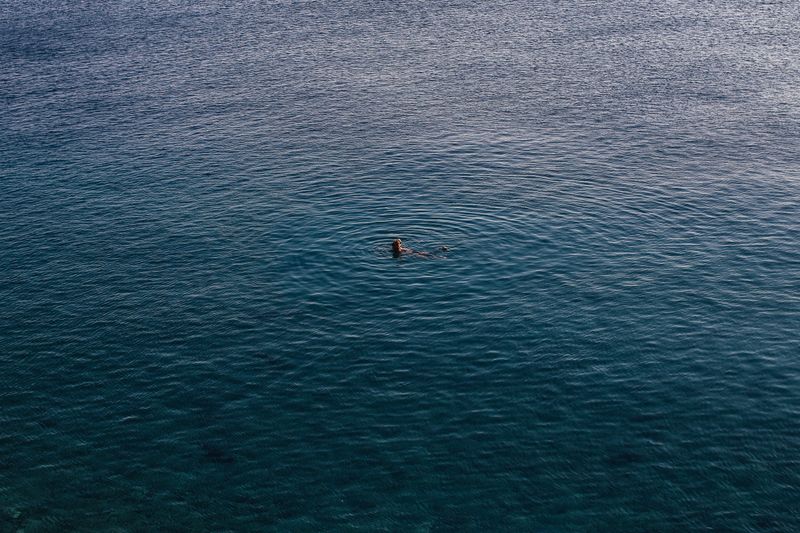
A person floating on the surface presents a surprising amount of area to the wind, and wind pushes them steadily downwind. Add any tidal stream and the total movement can be considerable over the length of an ordinary snorkel.
Out of season, because the water moves with you, there is no felt sense of speed and nothing that registers as being carried. Coming back is a completely different proposition from going out, since it is now into the wind and against the flow. Looking up at a fixed feature ashore at regular intervals is the only cheap way to notice what has happened.
Breath-holding is where the real risk sits
Deliberate hyperventilation before a breath-hold lowers carbon dioxide, which is what normally drives the urge to breathe. The oxygen supply is not increased, so a diver can reach the point of losing consciousness without ever feeling short of breath.
This is well documented and is the reason freediving is taught with strict supervision and a specific set of practices. Doing any of it alone removes the only thing that makes it survivable when it goes wrong. Anyone interested in breath-hold diving should be learning it from qualified instructors rather than from experience.
Look, do not touch, and do not feed
Handling marine animals damages protective mucus layers, causes stress responses and can injure them internally. Standing on coral or grabbing rock to stabilise yourself breaks structures that took a very long time to grow.
Out of season, feeding changes animal behaviour, concentrates species unnaturally and creates interactions that end badly for everyone. Some of what looks inert stings, and some of what looks harmless is defended in ways that are not obvious.
Local marine park rules exist in many places and are specific to that site, its species and its pressures.
The physical things people underestimate
The back of the body faces the sun for the entire session, and cloud does very little to reduce the exposure. Long immersion cools even in warm water, because water removes heat far more effectively than air does. A snorkel does not reduce the effort of swimming, and returning against wind and chop is genuinely hard work.
Before the first ferry, fins change how far you travel per stroke, which is exactly why drift becomes larger than intended. Boat traffic is the other constant, and a snorkeller is low, quiet and extremely difficult to see from a wheelhouse.
Prices and opening hours on a seasonal coast are close to fiction outside the season.
Where to learn and who to ask
Local guides know the sites, the flow and the times of day when a given place is workable, which no general advice can supply. Harbour offices and lifeguard information cover traffic, byelaws and any local restrictions on where people go in the water. Qualified instruction covers technique, equipment and the assessment of conditions in a way that watching videos does not.
With the tide out, conditions at a snorkelling site vary with tide, wind and swell direction, so yesterday's experience is not a plan. Asking on the day, locally, remains the only reliable way to know what a particular piece of water is doing.
Side by side
| Consideration | What it means in practice |
|---|---|
| What changes the moment your face goes in | Face-down swimming removes the visual and acoustic cues that track position. |
| Drift happens without any sensation | Wind on a floating body pushes it steadily downwind without any sensation of speed. |
| Breath-holding is where the real risk sits | Hyperventilating before a breath-hold dive is associated with loss of consciousness underwater. |
The takeaway
Sight on something ashore every few minutes, because the sea moves you silently while you are looking the other way.
The best hours on any shore are the ones before the car parks fill.
Questions readers ask
Why do snorkellers drift so far without noticing?
There is no felt sensation of movement when the water around you is moving too, and looking down removes the fixed references that would reveal it. Regularly sighting on something ashore is what makes the drift visible.
Is a snorkel vest or float worth using?
Buoyancy aids and bright surface floats make a snorkeller far more visible to boat traffic and reduce the effort of staying on the surface. They are not a substitute for local knowledge, supervision or an honest assessment of the conditions.