Islands
Between Inhabited and Uninhabited There Are Several Kinds of Island
Permanent population, seasonal population, no population but daily visitors, and no landing at all are four different destinations with four different rulebooks.

This works through degrees of island habitation in the order the parts actually depend on each other.
The short version
- Uninhabited does not mean unmanaged, unowned or open to landing.
- Seasonally occupied islands have services only while someone is there.
- Reserve islands often require a permit, a licensed operator or both.
Permanently inhabited, with services
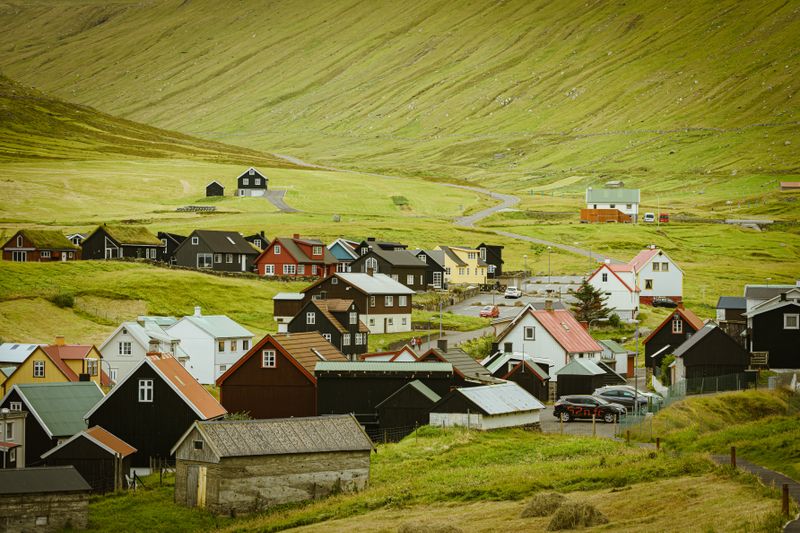
An island with a year-round population usually has a shop, a school or a link to one, and some form of medical cover. Those services exist because a resident community needs them, not because visitors are expected to use them. The transport link is correspondingly regular, and it is designed around residents travelling for work and appointments.
This is the easiest category to visit and the one where ordinary assumptions about opening hours roughly apply. Even here the winter version of the island is a different place from the summer version, with a different timetable.
Seasonally occupied
Some islands are worked rather than lived on: grazing, fishing bases, lighthouse maintenance or a summer-only settlement. People are present for part of the year and absent for the rest, so power, water and shelter follow their presence. Arriving outside that window means arriving somewhere with buildings but no functioning services of any kind.
With the tide out, boat access may exist only while the season lasts, which makes the shoulder weeks genuinely uncertain rather than merely quiet. The buildings are somebody's working property even when empty, which is worth remembering before opening a door.
Uninhabited but visited
A great many small islands have no residents and a regular day-boat service in the warmer months. They typically have a landing point, a path network and nothing else, including no water, no shelter and no bin. Everything brought ashore has to leave again, and that includes food waste, which changes seabird and rodent behaviour.
The absence of people is exactly what makes these islands worth visiting, and it is the thing most easily destroyed. Time ashore is set by the boat, not by you, and the return time is a hard limit rather than a suggestion.
Protected, permitted and restricted
Many uninhabited islands are nature reserves with legal protection, and landing may require a permit or a licensed operator. Seabird breeding seasons close some islands entirely for months, because disturbance during nesting has measurable consequences.
Others are closed for biosecurity: rodent-free islands are a conservation asset, and a single stowaway can undo decades of work. Checking bags and boots for seeds, insects and rodents before a landing is a standard requirement in a number of places.
The rules are set island by island and enforced locally, so the operator's briefing is the authoritative version.
Private, military and industrially used
Some islands are privately owned with no public access, and ownership in many countries extends to the foreshore. Others are military ranges, quarantine stations, quarry sites or infrastructure platforms with obvious safety exclusions.
Range danger areas are published, and the times they are active are the times when there is no discretion at all. A few are the subject of unresolved disputes, and visiting them is a political act whether or not you intend it as one. Charts, notices to mariners and national mapping agencies are where these designations are actually recorded.
Harbour towns work for a living, and access is not owed to visitors.
Finding out which one you are dealing with
National mapping, hydrographic charts and conservation agency listings will tell you the status of a named island. Local operators know the practical version, including who to ask and what the current landing arrangement is. The absence of an internet listing is not evidence of open access; small islands are simply not documented online.
Where a permit exists it is usually free or inexpensive, and the process is short compared with the trip itself. Doing that homework is also how you find out whether a landing is realistic in the month you plan to go.
The takeaway
Check an island's status before its ferry, because the landing may be the part that needs permission.
Arrive a day early. A coastline rarely rewards a tight schedule.
Questions readers ask
Can you camp on an uninhabited island?
Sometimes, but it depends on ownership, conservation designation and national access law, all of which vary widely. Where it is permitted there are usually conditions about fires, waste and season, and where it is not the reason is normally nesting birds.
Who owns an island with nobody on it?
Someone almost always does: a private owner, a community trust, a conservation body or the state. Unowned land is rare, and the absence of residents says nothing about the absence of an owner or of rules.