Islands
Taking a Car to an Island Is Usually the Wrong Decision
Vehicle deck space costs the most, books out the earliest and buys you the least on an island you could walk across.
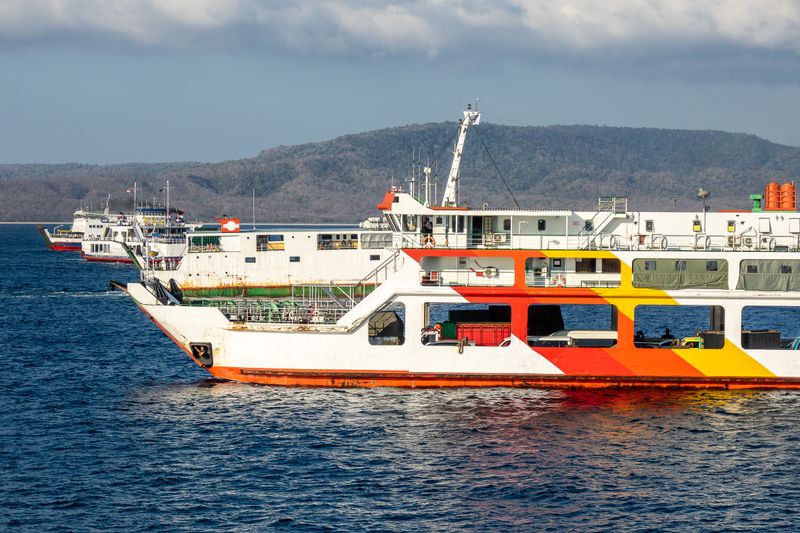
This looks at vehicles on island crossings from the practical end — what holds up once conditions stop being ideal.
What holds up in practice
- Vehicle fares are typically many times the foot passenger fare.
- Vehicle space is capacity-limited and sells out first.
- Many islands have limited roads and constrained parking.
What the vehicle deck actually costs
A ferry sells space, and a car occupies far more of a vessel than a person standing on the passenger deck. That is why vehicle fares are structured separately and why they rise steeply with length and height.
On short crossings the difference is modest; on long ones it can exceed the entire cost of the rest of the trip. Trailers, roof boxes and bike racks push a vehicle into higher length bands, sometimes without the driver realising. Measuring your vehicle as it will actually be loaded avoids an expensive conversation at the check-in booth.
Capacity is the harder constraint
A vessel has a fixed number of lane metres, and once they are sold, no amount of flexibility creates more. Residents, deliveries and essential services have priority on many lifeline routes, and rightly so.
On the water, weather can force a load reduction, and vehicles are removed from a sailing before foot passengers are. A relief vessel brought in at short notice may carry no vehicles at all, stranding a car for days. Foot passengers almost always get across; cars sometimes do not.
What you gain by leaving it behind
Many small islands have a road network measured in single-figure kilometres, which a bicycle covers easily. Island buses, community minibuses and post buses exist on larger islands and are usually timed to the boat. Local car hire on the island removes the crossing cost entirely, though availability is limited and booking is essential.
With the tide out, walking from the pier is genuinely the intended way to arrive on a large number of islands. The saving on a family crossing frequently exceeds the cost of hiring transport at both ends.
When taking the car is right
Long stays, remote self-catering, young children, mobility needs and bulky equipment all justify the deck space. Islands with substantial road networks and dispersed attractions are genuinely difficult without a vehicle. Island-hopping itineraries where you cross several times may be simpler with one vehicle than with repeated hires.
Carrying camping gear or a lot of provisions is a practical reason that has nothing to do with convenience.
The test is whether you will use it daily, not whether it would occasionally be nice to have.
Driving once you are there
Island roads are often single track with passing places, and the etiquette is specific and locally understood. Passing places are for passing and for being overtaken, not for parking to take a photograph.
Out of season, livestock on unfenced roads is normal in many places and is the main cause of island collisions. Fuel may be available at limited hours or not at all, so arriving with a full tank is the standard practice. Verges are frequently soft, and a car pulled off a single track road can be difficult to recover.
Harbour towns work for a living, and access is not owed to visitors.
Bicycles as the middle option
Most operators carry bicycles for a small fee or free, and they rarely count against vehicle capacity. A bicycle turns a twelve kilometre island from a full day of walking into a comfortable morning. Island roads can be steep and surfaces rough, so gearing matters more than speed.
On the water, wind is the real variable, and a headwind on an exposed island road is harder than the gradient. Hiring on the island avoids carrying a bike through the whole journey and supports a local business.
The takeaway
Ask whether you will drive every day; if the answer is no, leave the car on the mainland.
The best hours on any shore are the ones before the car parks fill.
Questions readers ask
Do I need to book a vehicle space in advance?
On most routes with limited capacity, yes, and earlier than you would expect in peak season. Foot passenger travel is usually far more flexible.
Can I take a hire car on a ferry?
Rental agreements differ, and some restrict or prohibit ferry travel or travel to particular islands. Check the specific terms rather than assuming.