Seasons & Weather
Onshore and Offshore Wind Change the Beach as Well as the Water
The direction of the breeze decides where the sand goes, how clear the water is and whether an inflatable is a hazard.
Most explanations of the effects of onshore and offshore wind stop at the point where it starts to matter. This one carries on.
The short version
- Offshore wind holds waves up and improves water clarity.
- Onshore wind stirs sediment and pushes material onto the shore.
- Inflatables and paddleboards are dangerous in any offshore wind.
What offshore wind does
Air moving from land to sea holds the face of a breaking wave up rather than knocking it over, which produces cleaner breaks. The surface between waves is smoothed, so the water looks glassy and visibility for snorkelling improves markedly. Sand is blown seaward off the top of the beach, which is why the dry sand shifts and the dune faces get scoured.
Spray blows back off the wave crests in a fine plume, which is the most obvious visual signature of an offshore breeze. It also feels warmer on the beach, because the air arriving has been over sun-warmed land rather than cold water.
Why offshore wind is a safety issue
Anything that floats and catches wind is pushed steadily away from shore, and the drift is faster than most people can swim. Inflatable toys, air beds, paddleboards and light kayaks are all involved in rescues in exactly these conditions. The wind is often barely noticeable on the beach because it is coming from behind you and over sheltering ground.
Out of season, it strengthens further out, so the rate of drift increases exactly as the situation becomes harder to recover. Rescue organisations in many countries advise against using inflatables on open coast at all, and especially in offshore wind.
What onshore wind does
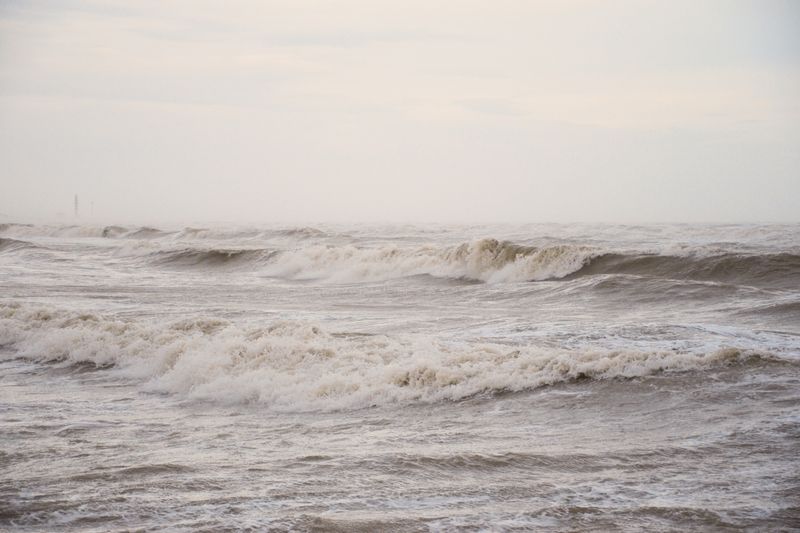
Waves are knocked over early and break messily, producing broken, aerated water that is uncomfortable to swim in. Fine sediment is stirred into suspension, so visibility drops and the water often turns a milky brown near shore. Seaweed, litter and anything else floating is pushed onto the beach and accumulates along the tideline.
Sand is driven up the beach and inland, which builds dunes over time and blasts anyone sitting on the beach today. It also feels considerably colder, because the air arriving has crossed water that is usually cooler than the land.
Cross-shore wind and drift
Wind running along a beach combines with any longshore current and moves swimmers steadily in one direction. The movement is difficult to notice without shore marks, because there is no sensation of being carried. It concentrates weed and litter at one end of the beach, which is a quick way to identify the prevailing direction.
Along that stretch of coast, entry and exit points should be chosen with the drift in mind, entering downwind of where you want to come out.
On a long beach with no landmarks, this is the mechanism that puts people a kilometre from their belongings.
Practical beach decisions
Windbreaks, umbrellas and tents become hazards rather than comforts above a moderate wind speed. Umbrellas lifting off beaches cause injuries every year and should be taken down rather than reinforced. Cooking, sun cream and eating all become considerably more difficult with blowing sand.
Moving to the lee end of a beach, or behind a groyne or rock outcrop, transforms the day for the cost of a short walk. On a dune coast the sheltered spot is usually just behind the first ridge rather than on the open sand.
Matching activity to direction
Snorkelling and clear-water swimming want a light offshore wind, close to shore and with no floating equipment. Bodyboarding and playing in the surf are generally better in a light onshore breeze with a small swell.
Sailing, windsurfing and kitesurfing have their own direction preferences and local spots for each. Walking and beachcombing are best after a strong onshore blow, which delivers material to the tideline. Knowing the direction before you leave the accommodation decides which beach you go to.
The takeaway
Offshore wind makes the water look inviting and makes anything floating a problem.
Weather is the itinerary. Everything else is a preference.
Questions readers ask
Why are inflatables so dangerous in offshore wind?
They sit high on the water, catch the wind like a sail and are pushed away from shore faster than a person can swim back. The wind is often stronger further out, so the situation worsens with distance.
Is offshore wind always better for swimming?
The water is calmer and clearer, which is pleasant, but the wind pushes you away from shore. Swim parallel and close in, and avoid anything that floats and catches wind.