Coastlines
A Dune System Walks Inland Unless Something Stops It
Coastal dunes are sand held down by specialised grasses, and when that cover breaks the whole system migrates landward, taking paths and car parks with it.

Dunes look like permanent hills of sand, but they are a moving system held temporarily in place by plants. Remove the plants and the sand resumes travelling inland.
Sand has to be trapped before it can pile up
Dry sand blows off the beach whenever the wind rises. It piles up only where something obstructs it, initially a line of driftwood or a clump of salt-tolerant plants.
Certain grasses then take over, growing upward through the accumulating sand rather than being buried by it. Their growth rate sets the height the foredune can reach.
This makes the front dune a living structure. It builds while the grass is healthy and stops the moment the grass is buried faster than it can grow.
The system is zoned from front to back
Nearest the sea, conditions are harsh: salt spray, moving sand, no fresh water. Few species tolerate it, so the foredune is sparsely vegetated.
Further back the sand is more stable, organic matter accumulates and a richer plant community develops. Older dunes inland can carry heath, scrub or woodland.
Low, damp hollows between ridges hold their own distinctive plants where the water table reaches the surface. A dune system is therefore several habitats in a narrow strip.
How a blowout starts
A break in the vegetation, from footfall, vehicles or grazing, exposes bare sand to the wind. The gap enlarges because the exposed edges keep eroding.
Sand removed from the gap is deposited further inland, and the hollow deepens into a trough that channels wind more effectively. The process accelerates once started.
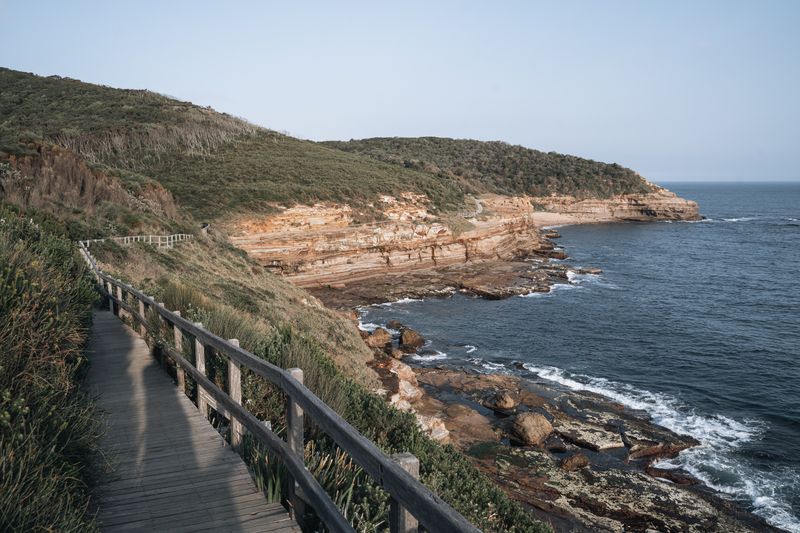
This is why single paths through dunes are fenced and boarded. Concentrating the wear on one line prevents dozens of small breaks from becoming a general collapse.
The dunes are also the flood defence
A dune ridge absorbs storm waves and protects low ground behind it, which is frequently farmland, roads or housing. It is a defence that repairs itself if left alone.
During a severe storm the front of the dune is cut back sharply, which looks like destruction. Much of that sand returns to the beach and is blown back over following seasons.
Hard structures placed within a dune interrupt this cycle. Sand cannot be recycled through a wall, so the beach in front tends to narrow over time.
Why dune management looks restrictive
Fenced areas, planted brushwood and closed sections are usually attempts to hold the front line in place. They work by trapping sand and keeping feet off the grass.
Some sites take the opposite approach and deliberately allow mobility, because a completely fixed dune system loses the bare sand habitats certain species need.
Both approaches accept the same fact. The dunes will move if permitted, and the only question is whether they are allowed to move where it matters.
Questions readers ask
Is a coast path easier than a hill walk?
Not reliably. The altitude is lower but the ascent is often comparable, and the exposure to wind and sun is usually greater.
How do I check whether a section is tidal?
Trail guides and local signage flag them, and the map will show the path crossing sand or running under a cliff. Where one is flagged, get the tide times for that specific stretch of coast rather than a nearby port.