Coastlines
Why One Beach Is Sand and the Next Bay Is Shingle
Wave energy sorts material by size, so the stones on a beach are a readout of how hard the sea works there.
Treat the sections below as a sequence. With why beach material varies, getting the early decisions right makes the later ones much easier.
Before you start
- High energy shores retain coarse material and lose fine sand.
- Beach steepness rises with the size of the material.
- A single beach can be sand at one end and shingle at the other.
Energy does the sorting
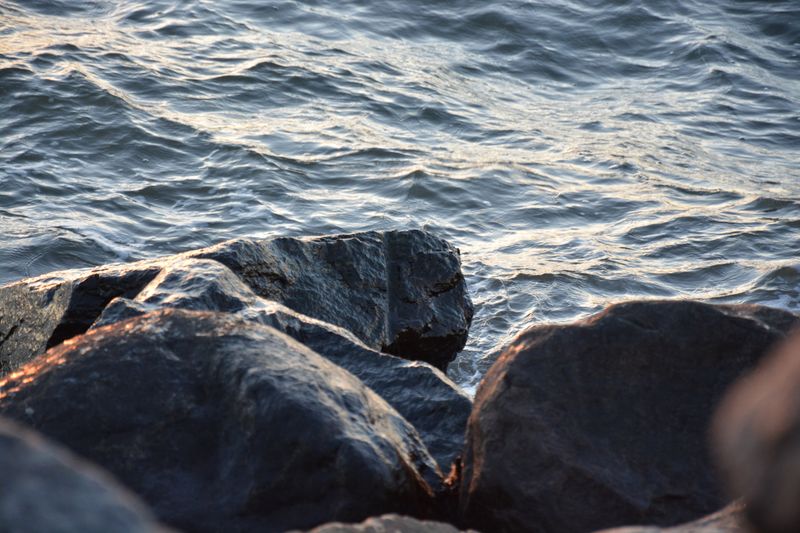
Waves lift material and carry it, and how much they can move depends on how much energy they arrive with. On a high-energy shore the fine sand is suspended and carried away offshore, leaving gravel and cobbles behind.
On a low-energy shore even fine particles settle out, which is how sheltered bays end up soft underfoot. The material on a beach is therefore a direct measurement of the wave climate, taken continuously and for free. A shingle beach beside a sandy one usually means the two receive different amounts of wave energy despite being close.
Steepness follows grain size
Water draining back through coarse shingle percolates rather than running over the surface, so it carries less material seaward. That imbalance builds a steep profile, which is why shingle beaches often drop sharply within a few metres of the waterline. Fine sand holds water near the surface, the backwash runs strongly and the resulting profile is long and shallow.
This is not a cosmetic difference: a steep beach produces a dumping shore break and sudden deep water at the edge. Anyone entering the water should read the beach profile first, because it predicts the shore break better than the wave height.
Where the material comes from
Beaches are supplied by eroding cliffs, by rivers delivering sediment and by material moved along the coast from elsewhere. When a defence traps that supply, beaches downdrift of it are starved and shrink, sometimes dramatically.
Some beaches are fed almost entirely by one river, and a dam far inland changes what is underfoot at the coast. Shell and coral sands have a biological source instead, which is why some tropical beaches are white and stay cool. Volcanic coasts produce dark sand that absorbs heat and becomes genuinely painful to cross at midday.
Seasonal change on one beach
Many beaches carry a summer profile with sand pushed up the shore and a winter profile with that sand stored offshore. The same beach can be wide and soft in August and narrow and stony in February without anything unusual happening. Photographs online are usually taken at the flattering point of that cycle rather than at a representative moment.
Storm events can move the whole system within a day, exposing peat beds, wrecks or old forest floors underneath.
Those exposures are temporary, which is why they attract crowds when they appear.
What it means for the day
Shingle is hard on bare feet, hard to walk far on and unpleasant to lie on without a mat. It also drains, so it stays usable after rain and rarely gets the trapped seaweed smell of an enclosed sandy bay. Sand suits children, long walks and easy water entry, and it is far more affected by wind on a blowy day.
With the tide out, mixed beaches with sand at low tide and shingle above are common and effectively two different beaches by the hour. Checking the tide state before judging a beach saves the disappointment of arriving at the stony half.
Tides, currents and swell are local knowledge, so ask somebody who swims there.
Taking nothing with you
Removing pebbles from beaches is restricted or prohibited in many countries because the material is part of the defence. The rule exists because thousands of small removals genuinely reduce the volume of a beach over time. Building large stone stacks has the same effect on a smaller scale and disturbs the small life living under them.
With the tide out, sea glass and shell collecting is treated differently in different places, so it is worth checking rather than assuming. The safest habit is to photograph what you find and leave the beach with the same mass it had when you arrived.
The takeaway
The stones under your feet tell you how hard the sea works on that particular bay.
The best hours on any shore are the ones before the car parks fill.
Questions readers ask
Is shingle worse for swimming?
It is different rather than worse. Entry is harder and the shore break is often steeper, but the water is frequently clearer because less fine sediment is suspended.
Why did a familiar beach lose all its sand?
Most likely a storm moved it offshore into a bar. It often returns over the following weeks and months, though not always, and not always to the same place.