Coastlines
Chalk and Limestone Coasts Fail in Different Ways
Both are soft pale rock that makes bright cliffs, but chalk collapses in blocks along joints while limestone dissolves from within and fails without warning.

Chalk and limestone both produce pale, bright cliffs that photograph alike from a distance. They break down by different processes, and the difference decides what the shore beneath them looks like.
Chalk fails along its joints
Chalk is soft enough to scratch with a coin, but it is cut through by vertical joints. Water gets into those cracks, freezes or simply widens them, and the rock parts along the line.
The result is a cliff that stays close to vertical as it retreats. Blocks come away whole, so the face is renewed rather than worn into a slope.
Because the failures are sudden and local, a chalk cliff can look stable for years and then lose a section overnight. The warning signs are fresh white scars and fallen material at the base.
Limestone dissolves before it breaks
Limestone is chemically attacked by slightly acidic water, so it loses volume from the inside as well as the face. Cavities, fissures and small caves develop behind an apparently solid wall.
Ground above such a coast can carry sinkholes and blowholes where the roof of a cavity has gone. These features appear inland as well as at the cliff edge.
Collapse then happens without the visible cracking that precedes it in other rocks. A limestone headland can be hollow long before anything about it looks unsound.
The debris tells you which rock you are on
Chalk fragments are soft and break down quickly in the surf, so little of the collapsed material survives as beach. What does survive is usually the flint bands the chalk contained.
That is why so many chalk coasts have shingle beaches of hard, dark pebbles under bright white cliffs. The beach material is the impurity, not the rock itself.
Limestone survives longer in the water and produces angular blocks and platforms. A limestone shore is often a shelf of rock rather than a proper beach.
Why the two coasts feel different underfoot
A chalk shore tends to be shingle above and a flat wave-cut platform below, slippery with weed and covered at high water. Walking it is a tide-dependent exercise.
Limestone shores hold rock pools in solution hollows and offer sharper, more broken footing. The edges bite, and the surface stays awkward even when it is dry.
Both are hard on footwear and both change character completely between low and high water. The rock decides how much of the shore exists at any given moment.
What this means for the path along the top
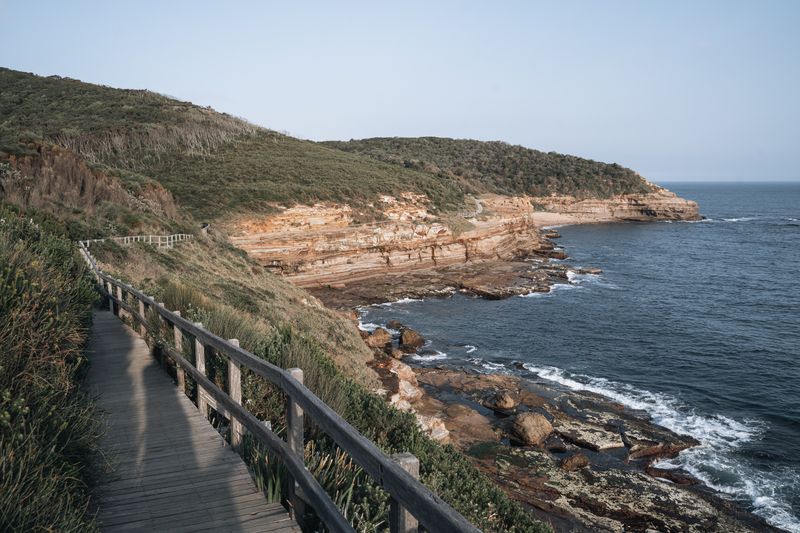
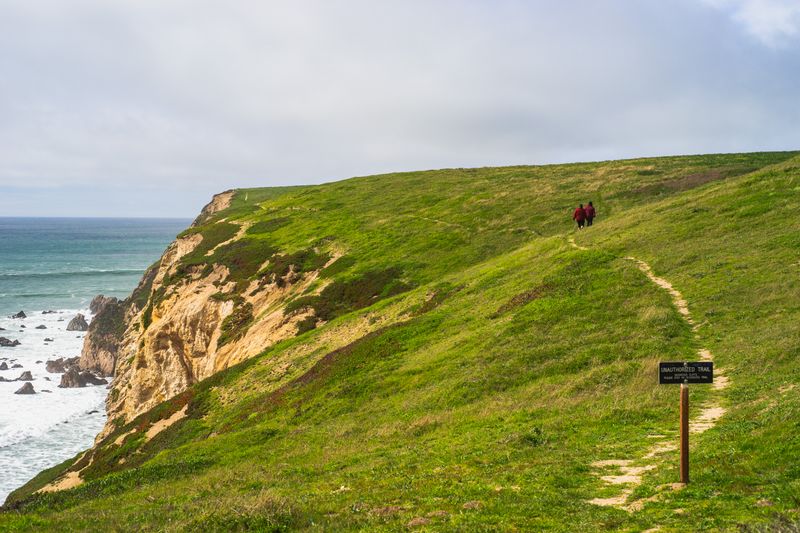
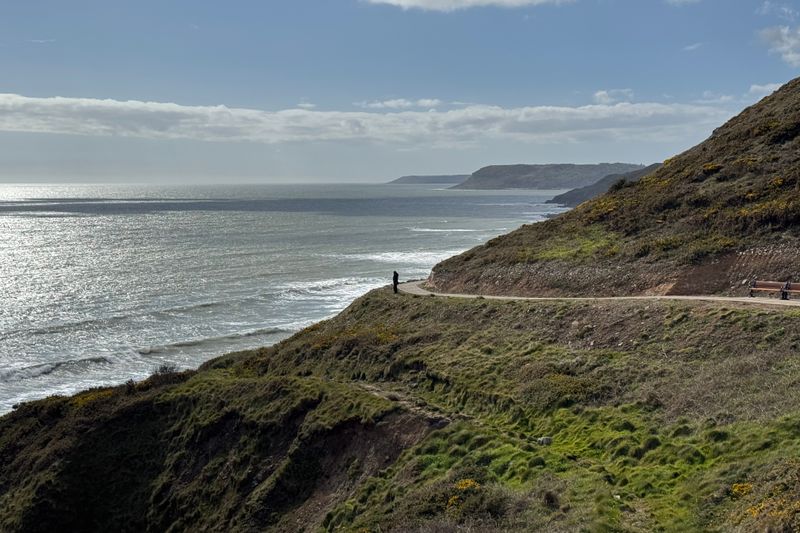
Coast paths on chalk are routinely diverted inland because the edge has moved. The retreat is not steady, so a route that was safe last season may now overhang.
On limestone, the risk is less visible from the surface. Fenced-off areas often mark voids rather than crumbling edges, and the ground beyond may look perfectly firm.
In both cases the fencing is set back from the actual edge for a reason. The margin allows for the next failure, not the one that has already happened.
Questions readers ask
Is a coast path easier than a hill walk?
Not reliably. The altitude is lower but the ascent is often comparable, and the exposure to wind and sun is usually greater.
How do I check whether a section is tidal?
Trail guides and local signage flag them, and the map will show the path crossing sand or running under a cliff. Where one is flagged, get the tide times for that specific stretch of coast rather than a nearby port.