Seasons & Weather
Cyclone Season Windows and What Shoulder Really Means There
On tropical coasts the shoulder season sits against a hazard season, and the trade-off is different from a temperate one.

Everything below about tropical storm season planning comes from what actually happens rather than from what is supposed to.
What holds up in practice
- Tropical storm seasons have defined but approximate start and end dates.
- Risk within a season is concentrated in particular months.
- Official meteorological agencies are the only source worth using.
How the seasons are defined
Tropical cyclone seasons are defined by regional meteorological agencies with published start and end dates for each basin. Those dates are administrative boundaries around a climatological pattern rather than guarantees about any individual year.
Within a season, activity is usually concentrated in a shorter peak period rather than spread evenly across the months. Storms outside the official season are uncommon but not unknown, which is why the dates are described as a guide. Basins differ from one another substantially, so advice for one region does not transfer to another.
What shoulder means in that context
The shoulder months at the edges of a cyclone season combine lower prices and fewer visitors with a reduced but real risk. That is a genuinely different calculation from a temperate shoulder season, where the downside is rain rather than evacuation.
With the tide out, many travellers accept the trade with flexible bookings and appropriate insurance, which is a reasonable position. Others avoid the season entirely, which is also reasonable and is simply a different tolerance. What does not work is treating the risk as negligible because a particular month has been quiet in recent years.
What disruption actually looks like
Direct hits are rare for any specific location; disruption from a system passing nearby is far more common. Airports close, ferries stop, power fails and resorts implement their own weather protocols well ahead of an arrival.
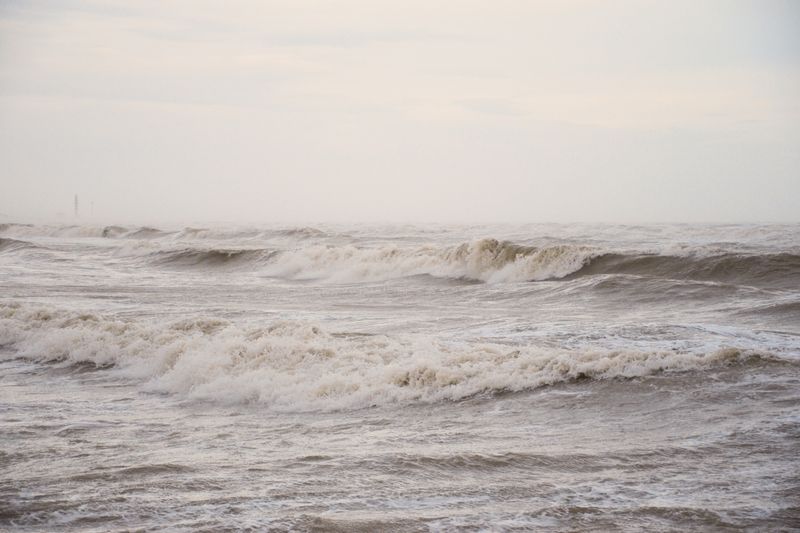
Along that stretch of coast, heavy rain, swell and dangerous surf reach a coast long before the storm itself does, and persist afterwards. Recovery of services can take days after conditions improve, particularly on islands dependent on a single supply route. Most travellers affected by a storm experience delay and closure rather than danger.
Planning if you go
Book accommodation and flights with genuine flexibility rather than the cheapest non-refundable option. Buy insurance early, since cover for a named storm typically ends once that storm has been named.
Register with your embassy or foreign ministry service if one is offered for the country. Identify the local emergency broadcast channel and the accommodation's own procedure on arrival.
Keep a charged power bank, some cash and copies of documents accessible rather than packed away.
During a warning
Follow instructions from local authorities and from your accommodation without negotiating them. Evacuation orders on low-lying coasts and barrier islands exist because roads flood before the storm arrives.
On the water, storm surge, not wind, is the primary cause of harm on a coast, and it affects areas that look safely inland. Do not go to the beach to look at the sea, which is a recurring cause of fatalities before and after landfall. Stay away from the water for a considerable period afterwards because of debris, contamination and residual swell.
Timetables on small routes shift with the season and with the weather on the day.
Choosing a destination instead
Some tropical coasts sit outside the main cyclone belts and offer similar conditions with a different risk profile. Others have a wet season without significant cyclone risk, which is a different and more manageable trade.
Official climatology for the specific coast is published by national agencies and is free to consult. Travel advisories from your own government cover the practical side and are updated continually. Choosing the region for the season is easier than trying to manage a season in the wrong region.
The takeaway
Buy the flexible ticket and the insurance early, then follow whatever the local agency says.
The best hours on any shore are the ones before the car parks fill.
Questions readers ask
Is it irresponsible to travel during cyclone season?
Not inherently, but it requires flexible bookings, appropriate insurance bought early, and a willingness to follow local instructions. Many people travel in these months without incident, and some are severely disrupted.
Where should I get storm information?
From the official meteorological agency for the region and from local authorities. Social media reposts and aggregator sites frequently lag or distort the official advisories.