Harbour Towns
Locks, Sills and Basins: Harbours That Refuse to Dry Out
Where boats have to stay afloat at every state of tide, somebody built a gate, and the gate rearranges the whole rhythm of the port.

These are listed in the order worth acting on, which with impounded harbours and lock gates is not the order they are usually presented in.
What matters most
- A sill or gate holds water in a basin when the tide outside drops.
- Access windows are set by water level, so the harbour opens and closes each cycle.
- Impounded water flushes less, which changes temperature, sediment and weed.
Why a harbour gets a gate
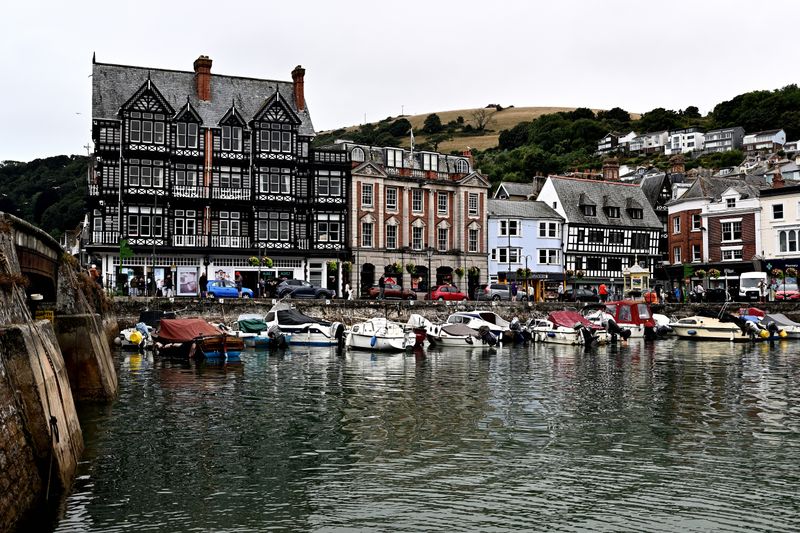
A tidal basin empties as the sea does, so boats either sit on the mud or leave before the water goes. Modern craft with deep fins and delicate hulls cannot take the ground the way a working boat with a flat bottom could. The engineering answer is a barrier that retains water when the tide outside falls below a chosen level.
The simplest version is a sill: a fixed wall over which water flows in and behind which it stays. The most elaborate is a full lock, which lets vessels pass at any state of tide by equalising levels in a chamber.
What each arrangement means in practice
A sill or half-tide gate gives an access window around high water, and that window is published by the harbour. Outside the window, boats simply wait, which is why waiting pontoons exist outside the entrance of so many basins. A full lock removes the waiting but adds a cycle time, since each transit involves filling or emptying a chamber.
When the wind turns, locks operate to published hours that depend on staffing as well as water level, and those hours change seasonally. The specific times differ at every port and are not comparable between them, so the local notice is the only source.
How this reorganises the town
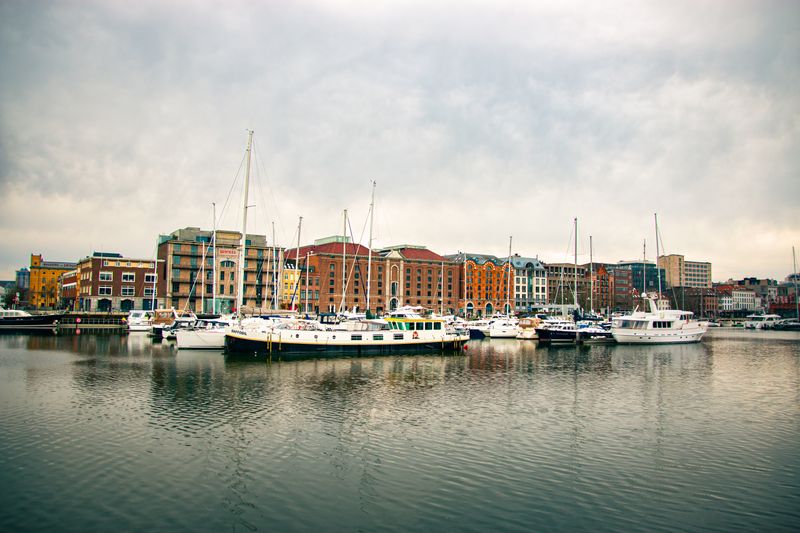
An impounded basin is full and photogenic at all times, which is why it usually ends up surrounded by cafes. The working port, if it survives, is on the tidal side of the gate where boats can come and go at will. That split is why so many harbour towns have a still, ornamental basin and a scruffier working quay nearby.
Traffic peaks at the access window, so the harbour is busy in bursts rather than continuously through the day. Standing near the gate an hour before it opens shows more of how the port works than an afternoon anywhere else.
The water behind the gate is different water
Restricting exchange with the sea means the basin flushes less, so it warms more and holds what enters it for longer. Sediment settles rather than being carried out, which is why impounded basins need dredging on a schedule. Weed and algae grow more readily in warm, still, nutrient-rich water, and pontoons and hulls foul faster.
Out of season, runoff from the surrounding streets arrives in a basin that has limited ability to disperse it. Some ports pump water through deliberately to maintain quality, which is another running cost the gate creates.
Somebody pays for all of this
Gates, pumps and lock machinery are heavy engineering in salt water, which is the most demanding environment there is. Maintenance is scheduled around closures, and a closure removes access for every boat in the basin at once. The cost is carried by berth holders, harbour dues and whatever public funding the port can attract.
On the water, this is why impounded marinas charge noticeably more than a drying harbour a short distance along the coast. It is also why some small ports have decided not to impound, accepting the mud and the tidal access instead.
Reading a gated harbour as a visitor
Signal lights and boards at the entrance show whether the gate is open, closed or about to change. A queue of boats holding position outside is the clearest possible indication of where the window is in its cycle. Depth gauges on the sill or the lock wall show the water level directly and are readable from the quay.
Bridges that lift for the same traffic run to their own timetable and can close a road without much notice. Harbour offices publish all of it, and reading the notice before parking near the bridge saves an unexpected wait.
Everything above, in order of what to do first
- Why a harbour gets a gate. A tidal basin empties as the sea does, so boats either sit on the mud or leave before the water goes.
- What each arrangement means in practice. A sill or half-tide gate gives an access window around high water, and that window is published by the harbour.
- How this reorganises the town. An impounded basin is full and photogenic at all times, which is why it usually ends up surrounded by cafes.
- The water behind the gate is different water. Restricting exchange with the sea means the basin flushes less, so it warms more and holds what enters it for longer.
- Somebody pays for all of this. Gates, pumps and lock machinery are heavy engineering in salt water, which is the most demanding environment there is.
- Reading a gated harbour as a visitor. Signal lights and boards at the entrance show whether the gate is open, closed or about to change.
The takeaway
Find the gate and its window, and the entire timetable of a harbour town becomes obvious.
Arrive a day early. A coastline rarely rewards a tight schedule.
Questions readers ask
Why do some marinas dry out and others do not?
It comes down to whether the basin has a sill, gate or lock holding water in. Building one is expensive, so smaller harbours often stay tidal and their boats are designed to sit on the bottom.
Does a lock delay every boat?
It removes the tidal restriction but adds a cycle time and often a wait for the next opening. Whether that is better than a tidal window depends on the boat, the trip and how long the lock takes at that port.
Also by Nandini Kamath
- A Steep Beach and a Shelving Beach Are Different SwimsBeaches & Swimming
- Sighting, Drift and Swimming in a Straight Line at SeaBeaches & Swimming
- Why Harbour Towns Eat Early and Shut in the AfternoonHarbour Towns
- Drying Harbours: Boats on the Mud Twice a DayHarbour Towns