Harbour Towns
How a Catch Is Actually Sold, and Why You Cannot Buy It
Between the boat and the plate sit an auction, a merchant and a cold chain, and most visitors only ever see the last of them.
The points below about the route a catch takes to market are ordered by how much difference they make, not by how often they get repeated.
What matters most
- Most landed fish is sold through auctions or contracts, not directly.
- Cold chain requirements govern how quickly fish must move.
- Public access to fish markets varies widely by country and port.
The chain from boat to buyer
Fish is landed, graded by species and size, iced or chilled and presented for sale within a very short window. Sales happen through an auction, a fixed contract with a processor, or a direct arrangement with a merchant. Buyers are usually wholesalers and processors rather than individuals, and they are buying in commercial quantities.
From the market the fish moves by refrigerated transport, often overnight, to cities and export markets. By the time it reaches a shop counter it may have travelled a long way from the port it was landed at.
Why the auction is early
Auctions run early because onward transport has to depart in time to reach markets and shops the same day. The cold chain is a legal and practical requirement, and every hour of delay reduces both quality and price. That timing is why a market building can be full of activity at four in the morning and empty by nine.
When the wind turns, some ports have moved to electronic auctions, which removes the crowd but not the schedule. Where public viewing is allowed, it is usually from a gallery or a defined area rather than on the floor.
Why local fish is not always local
A species with a high export price will leave the region regardless of how close the boats are to the restaurants. Conversely, fish landed elsewhere may be trucked in to supply local menus during a gap in landings. This is ordinary market behaviour rather than deception, though menu labelling rules differ between countries.
Along that stretch of coast, asking where a fish was landed rather than where it was bought produces a more informative answer. Ports with a strong local cooperative or a direct-sale scheme keep more of the catch nearby.
Buying fish as a visitor
Harbour shops, cooperatives and licensed stalls are the routes that exist for the public in most ports. Direct sales from boats are regulated in many jurisdictions and prohibited in some, particularly for shellfish. Shellfish are subject to strict controls because of biotoxin and contamination risks that cannot be judged by eye.
On the water, buying from a licensed seller is a food safety matter rather than a formality. Asking at the harbour office is the quickest way to find out what is legal and available in that specific port.
Reading the boats
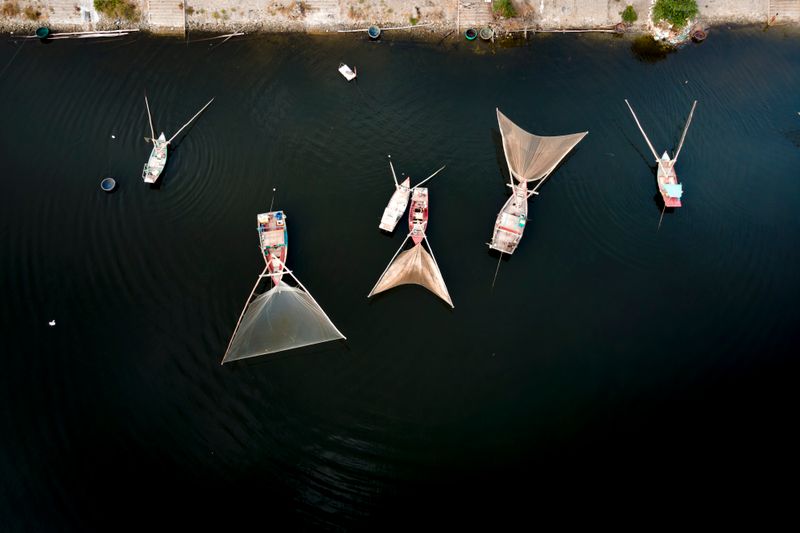
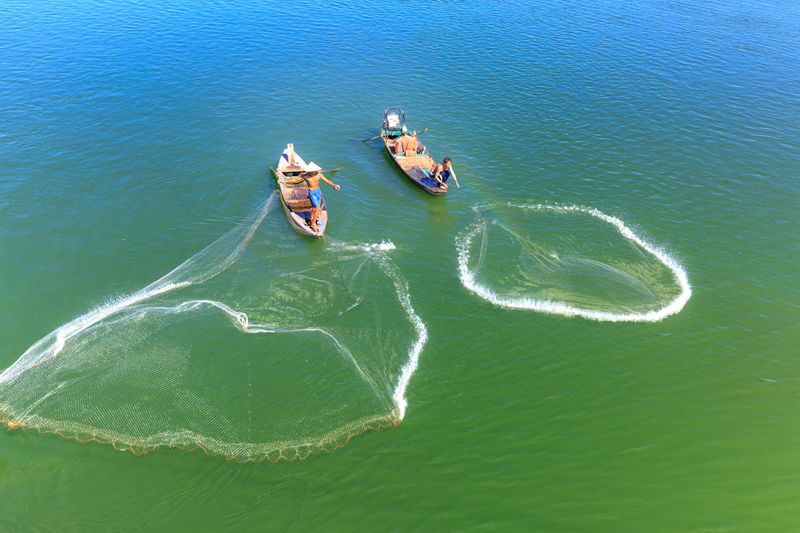
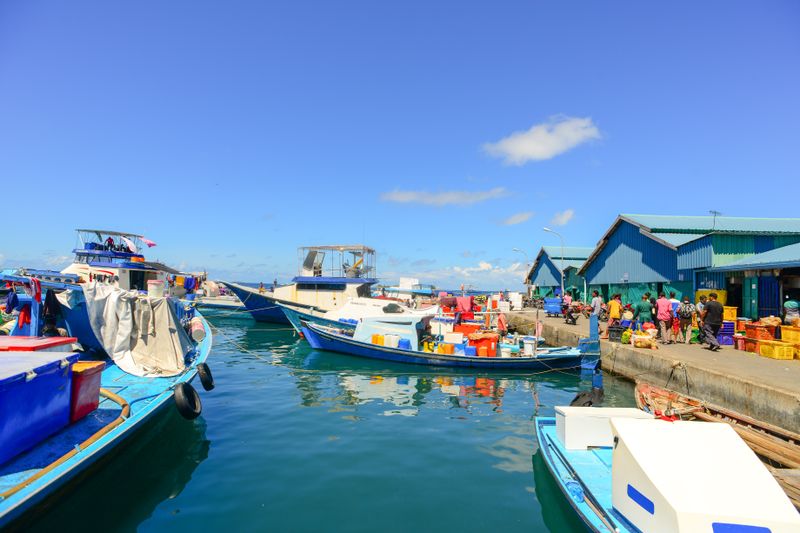
Gear on the quay identifies the fishery: creels and pots for shellfish, nets for pelagic species, trawl doors for demersal fishing. Hull size and registration markings indicate whether a boat works inshore day trips or longer offshore trips.
A fleet of very small boats usually means a shellfish or inshore fishery landing daily. Large refrigerated vessels indicate a port connected to distant water fishing and export. This single observation tells you more about a town's economy than most of what is written about it.
Harbour towns work for a living, and access is not owed to visitors.
Quotas, seasons and closures
Fisheries are managed with quotas, seasonal closures and minimum sizes that vary by country and by species. Those rules are why a species can be entirely absent from a market for months at a time. Closures also change which boats work when, so a harbour can be busy or quiet for regulatory reasons.
Out of season, sustainability ratings differ between organisations and between fisheries for the same species. Asking what is in season locally is a better question than asking for a particular fish by name.
Everything above, in order of what to do first
- The chain from boat to buyer. Fish is landed, graded by species and size, iced or chilled and presented for sale within a very short window.
- Why the auction is early. Auctions run early because onward transport has to depart in time to reach markets and shops the same day.
- Why local fish is not always local. A species with a high export price will leave the region regardless of how close the boats are to the restaurants.
- Buying fish as a visitor. Harbour shops, cooperatives and licensed stalls are the routes that exist for the public in most ports.
- Reading the boats. Gear on the quay identifies the fishery: creels and pots for shellfish, nets for pelagic species, trawl doors for demersal fishing.
- Quotas, seasons and closures. Fisheries are managed with quotas, seasonal closures and minimum sizes that vary by country and by species.
The takeaway
The catch leaves through a merchant, not a quayside stall; ask at the harbour office for the legal route.
Weather is the itinerary. Everything else is a preference.
Questions readers ask
Can I visit a fish market?
It varies by port and by country. Some run public viewing areas or tours, others are restricted to registered buyers for hygiene and safety reasons. Ask at the harbour office rather than turning up.
Is fish at the harbour fresher than in a city?
Not automatically. The cold chain is efficient enough that fish in a city may be as fresh, while local menus may be using fish landed elsewhere. Ask where it was landed.