Islands
Small Islands Keep More Buildings Than They Need
Churches, halls, schools and piers were built for a population that has since fallen, leaving a handful of residents maintaining infrastructure sized for their ancestors.

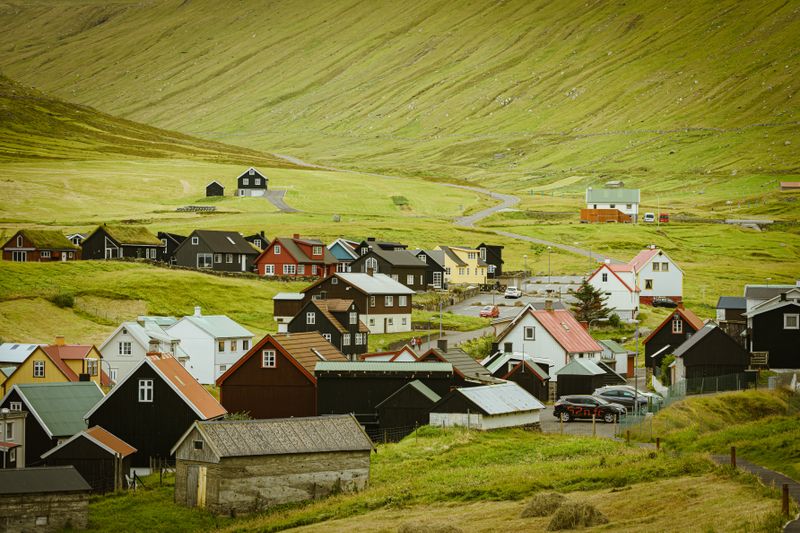
Arriving on a small island, the scale of the buildings often seems wrong. A community of a few dozen people may hold several churches, a large hall and a substantial pier.
The buildings date from the peak
Many island populations were several times larger a century or more ago, supported by fishing, kelp harvesting, quarrying or subsistence agriculture.
Public buildings were constructed for that population and built solidly, because materials had to be shipped and nobody wanted to do it twice.
The population fell for reasons largely outside the island's control, but the buildings remained, and they are what a visitor now sees.
Multiple churches usually mean historical division
Two or three churches on a tiny island generally record a denominational split rather than demand for seats, each congregation having built its own.
Congregations later merged or dwindled, leaving buildings whose maintenance falls on very few people and whose use may be occasional.
Some have become halls, houses or stores, and a converted church is often the largest indoor space available for anything community-wide.
Maintenance is the real burden
Salt air, wind and driving rain attack buildings continuously, and materials, scaffolding and tradespeople all have to be shipped in at freight cost.
A roof repair that would be routine on the mainland becomes a project requiring a boat, accommodation for the workers and weather that cooperates.
This is why buildings on islands tend to be either well kept or clearly abandoned. The middle state is not sustainable for long.
The volunteer layer is thin
The same small group of people typically runs the hall, the shop committee, the ferry association, the emergency response and the historical society.
When one or two of them leave, several functions become vulnerable at once, which is why island institutions can close abruptly rather than gradually.
Visitors sometimes read this as decline. It is more accurately a capacity problem, and islands with a stable working-age population do not have it.
What this means for planning a visit
Facilities that exist may not be open, and opening depends on whether the person who holds the key is available rather than on posted hours.
Community-run museums, halls and cafes often work on an honesty basis, and the contribution box is doing real work rather than symbolic work.
Asking before photographing interiors is worth doing, because many of these buildings are in private or trust hands and are not public in the way they appear.
Questions readers ask
Why do island flights cancel when the weather looks fine?
The limits that matter are at the airstrip, not where you are standing. Fog, a crosswind component or a low cloud base at the destination will stop a departure from an airport in clear sunshine.
Can you turn up and fly standby on a small island route?
Sometimes, but load and balance limits mean spare seats are not always usable, and residents with medical or work travel are usually prioritised. Standby on these routes is a possibility rather than a plan.