Seasons & Weather
Weed, Foam and the Weeks When a Beach Smells
Stranded seaweed, sea foam and algal blooms are all seasonal, largely natural and occasionally consequential, and none of them means the beach is broken.

Everything below about seasonal algal blooms and beach wrack comes from what actually happens rather than from what is supposed to.
What holds up in practice
- Stranded wrack feeds a food chain and helps stabilise the upper beach.
- Most sea foam is protein from decaying plankton whipped up by wind and waves.
- Some blooms produce toxins, which is why shellfish areas are monitored and closed.
The strandline is doing a job
Storms tear seaweed from the sea bed and deposit it along the high water mark, sometimes in enormous quantities. That wrack is habitat and food: sandhoppers, flies and their larvae live in it, and birds feed on them. It also traps windblown sand and helps the upper beach and embryo dunes build rather than erode.
Removing it mechanically takes the sand with it and removes the base of that food chain at the same time. Many beaches are now cleaned only in the busiest weeks and left alone the rest of the year for exactly this reason.
Why it smells
Decomposing seaweed in a low-oxygen pile produces hydrogen sulphide, which is the source of the characteristic smell. The process is a normal part of coastal nutrient cycling rather than a sign of pollution. Large accumulations in enclosed bays can generate enough gas to be a genuine nuisance and, in extreme cases, a hazard.
Local authorities monitor and clear those situations, and where they post a notice it is specific to that accumulation. For a visitor the practical point is that the smell is seasonal and usually clears with the next big tide.
Sea foam is mostly not pollution
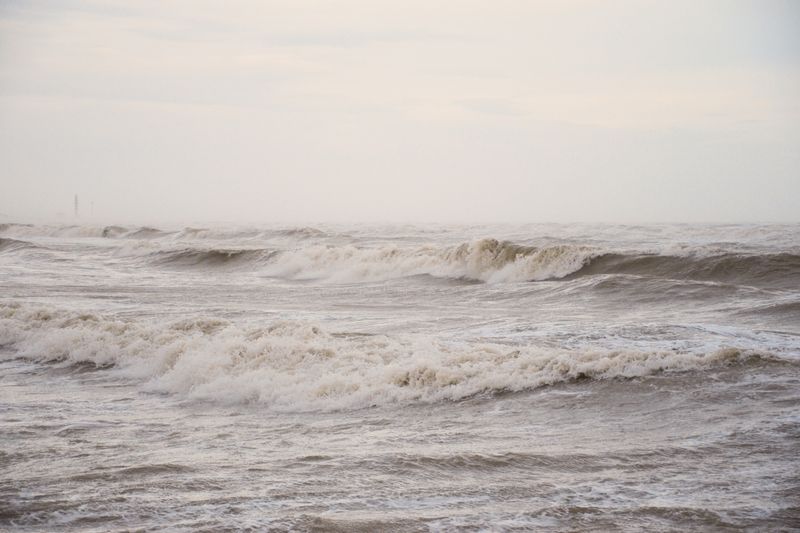
Foam collecting in the corners of a bay is generally organic material from decaying plankton, aerated by wind and surf. It appears in quantity after a bloom dies back, which is why it is seasonal on many coasts. Persistent foam with an unusual colour or a chemical smell is a different matter and is worth reporting locally.
Out of season, deep foam can conceal the water's edge and any drop beyond it, which is a hazard on its own terms. Environmental agencies publish guidance on distinguishing natural foam from pollution incidents, and they take reports seriously.
Blooms and why they happen when they do
Phytoplankton multiply when light, warmth and nutrients coincide, which produces a characteristic seasonal cycle. Nutrient enrichment from land increases the frequency and intensity of blooms in many coastal waters.
Before the first ferry, most blooms are harmless and are simply the base of the marine food chain doing what it does. Some species produce toxins that accumulate in filter-feeding shellfish without affecting the shellfish themselves.
That is why monitoring programmes exist and why harvesting areas are closed at short notice when levels rise.
Floating weed that arrives from elsewhere
Some coasts receive seasonal influxes of floating seaweed carried by ocean currents from a long way away. Offshore these rafts are important habitat, sheltering juvenile fish, turtles and a specialised community.
Out of season, inshore, in quantity, they decompose on the beach and can affect tourism, fishing and water quality. The scale of these arrivals varies substantially between years, and forecasting them is an active area of work. Regional monitoring services publish current conditions where this is a recurring issue, and they are the current source.
What to do with any of it
Do not collect shellfish from a shore during or after a bloom without checking the local health authority position. Keep dogs away from decomposing weed and from unusual foam, since both can affect animals more than people.
Before the first ferry, report anything with an unusual colour, an oily film or a chemical smell to the local environmental regulator. Expect insects around a big strandline in warm weather, and choose a section of beach accordingly rather than complaining about it. Look closely at the wrack line if you have any interest at all in what lives on the coast, because that is where it is.
The takeaway
The smell and the weed are usually the coast working normally; the things worth reporting look chemical rather than organic.
Arrive a day early. A coastline rarely rewards a tight schedule.
Questions readers ask
Is a beach covered in seaweed a dirty beach?
No. Stranded wrack is a natural and ecologically important feature, and its removal has costs for the upper beach and the species that depend on it. Persistent oily films, unusual colours or chemical smells are a different matter and should be reported.
Why do shellfish get closed but swimming does not?
Filter feeders concentrate toxins from the water in their tissue, so the risk is about eating them rather than about contact. Different hazards trigger different responses, and the rules differ between countries.