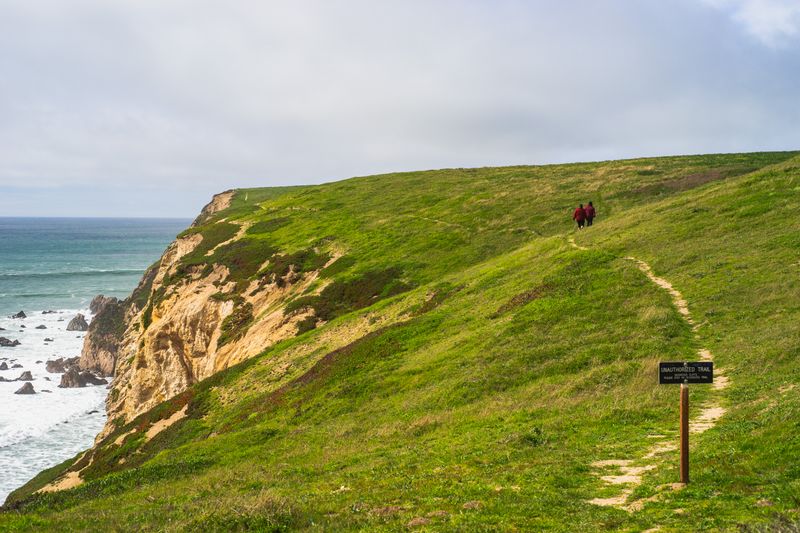
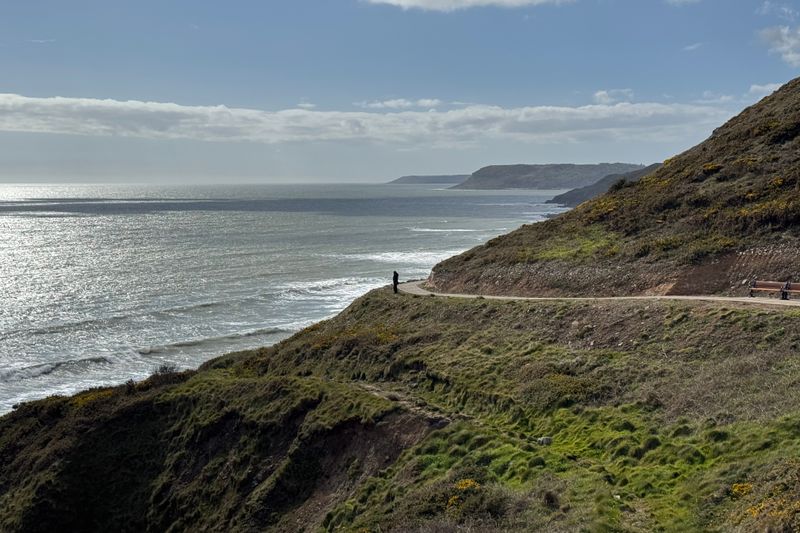
Coastlines
A Cold Current Can Run Along a Hot Coast All Summer
Latitude tells you what the air will do and almost nothing about the water, because some coasts pull cold water up from below all season.

There is a settled way of talking about coastal upwelling and cold currents. It is worth asking how much of it survives contact with the detail.
The argument in brief
- Alongshore wind can push surface water offshore and draw cold water up in its place.
- Eastern ocean margins are typically cooler than western margins at the same latitude.
- Air temperature is a poor predictor of sea temperature on an upwelling coast.
The mechanism that makes a coast cold
When wind blows steadily along a coast, the rotation of the earth deflects the surface water it drags, pushing it away from the shore. Water has to replace what left, and the only available supply is from below, so deeper water rises along the coast.
Deep water is cold, so the sea near the shore can be far colder than the sea a short distance offshore. This happens on particular coasts because it needs a steady wind blowing along the shore in a specific direction. When that wind drops or reverses, the cold water sinks back and the sea surface can warm noticeably within days.
Which coasts this affects
As a general pattern, the eastern sides of ocean basins are cooler than the western sides at the same latitude. Western margins receive warm water carried poleward from the tropics, which is why some high-latitude coasts stay unexpectedly mild.
When the wind turns, eastern margins receive cool water carried towards the equator, reinforced by upwelling along the coast itself. This is why two cities on opposite sides of the same ocean, at the same latitude, have completely different seas. It also explains a surprising number of coastal climates that people describe as anomalous when they are simply oceanic.
What it does to the air
Warm, humid air moving over cold water is chilled from below until it reaches its dew point and turns into fog. That is why upwelling coasts have famous fog seasons that peak in the warmest months rather than the coldest ones.
The cold water also stabilises the lower atmosphere, suppressing convection and reducing rainfall on the coast behind it. Several of the world's driest coastal deserts sit directly against cold ocean water for exactly this reason. So the same current that empties the sky of rain fills the morning with fog, and both effects come from one mechanism.
Why the fishing is good there
The water rising from depth carries nutrients that have accumulated below the sunlit layer over a long period. Those nutrients feed plankton, and the plankton support a food chain that is disproportionately productive for the area involved.
Some of the most important fisheries in the world sit on upwelling coasts, which shapes the towns along them. The productivity is variable rather than reliable, because it depends on winds that shift between years.
When the pattern weakens, catches fall, and coastal communities feel that within a single season rather than gradually.
The mismatch a visitor actually meets
On an upwelling coast the air can be hot and dry while the water is cold enough to provoke the cold shock response. That response involves an involuntary gasp and rapid breathing on entry, and it reduces the ability to swim within moments.
On the water, because the air feels warm, people underestimate the water, which is precisely the combination that catches them out. Sea temperature also changes over days as the wind pattern shifts, so last week's experience is not a guide. Local lifeguard, harbour or coastguard information and proper open water instruction are the right sources for that coast on that day.
Prices and opening hours on a seasonal coast are close to fiction outside the season.
Recognising an upwelling coast before you go
Sea surface temperature charts show a cold tongue hugging the shore with warmer water further out, which is the signature. Wetsuits in shop windows in a hot climate are a reliable local indicator of what the water is actually like.
On the water, persistent morning fog burning back to a clear afternoon is another sign, particularly in the warmest months. A desert or semi-desert landscape running down to a cold sea usually means the current is doing both jobs at once. Knowing this in advance changes what you plan to do at the coast rather than merely what you expect to feel.
The takeaway
On a cold-current coast, read the sea temperature and the wind direction rather than the air temperature.
The best hours on any shore are the ones before the car parks fill.
Questions readers ask
Why is the sea cold when the air is over thirty degrees?
Air heats and cools quickly while the sea does not, and on an upwelling coast the surface water is continuously replaced from depth. The two systems are effectively decoupled, so air temperature says very little about water temperature.
Does upwelling happen at the same time every year?
It follows the seasonal wind pattern, so it has a broad season on most affected coasts, but its strength varies between years and within a season. Wind shifts of a few days can change the near-shore water noticeably.