Coastlines
Where a Desert Reaches the Sea, the Coast Runs on Fog
Almost no rain, a cold ocean, a fog bank that arrives most nights and a shoreline where the only reliable water comes out of the air.

What follows is an argument about arid coastlines, and about where the received version of it stops being true.
The argument in brief
- Coastal deserts form where sinking air meets cold water and suppresses rain.
- Fog provides moisture that rain does not, and life there is adapted to it.
- Distances between fuel, water and help are the defining practical constraint.
Why the driest coasts are beside the sea
Large-scale circulation produces belts of sinking air on either side of the tropics, and sinking air does not make rain. Where that belt meets a cold ocean current, the lower atmosphere is stabilised further and convection is shut down almost entirely.
The result is a coast that may go through years without meaningful rainfall while sitting directly beside an ocean. Mountains close behind the shore complete the arrangement by blocking whatever moisture arrives from the other direction. These are not marginal cases: some of the driest measured places on earth are within sight of the sea.
The fog is the weather
Warm air moving over cold water cools until moisture condenses, producing a dense low cloud that drifts inland overnight. It typically arrives in the evening, sits through the night, and burns back towards the water during the morning. That daily rhythm sets when the light is usable, when the roads are visible and when the air is cold rather than hot.
Fog moisture is enough to wet surfaces and support life even where rainfall is effectively absent from the record. It is also thick enough to make coastal driving genuinely difficult, and it does so at exactly the hours people travel.
Life that drinks the air
Lichens, succulents and specialised insects on these coasts harvest fog moisture directly rather than relying on rain. Some beetles collect condensation on their bodies and channel it, and some plants absorb water through their surfaces. Fog-harvesting nets built on the same principle supply water to a number of communities on arid coasts.
On the water, the vegetation grows in narrow bands where the fog reliably reaches, so the greenery follows altitude rather than rivers. These are slow-growing, fragile communities, and vehicle tracks across them can remain visible for a very long time.
What the shoreline is like
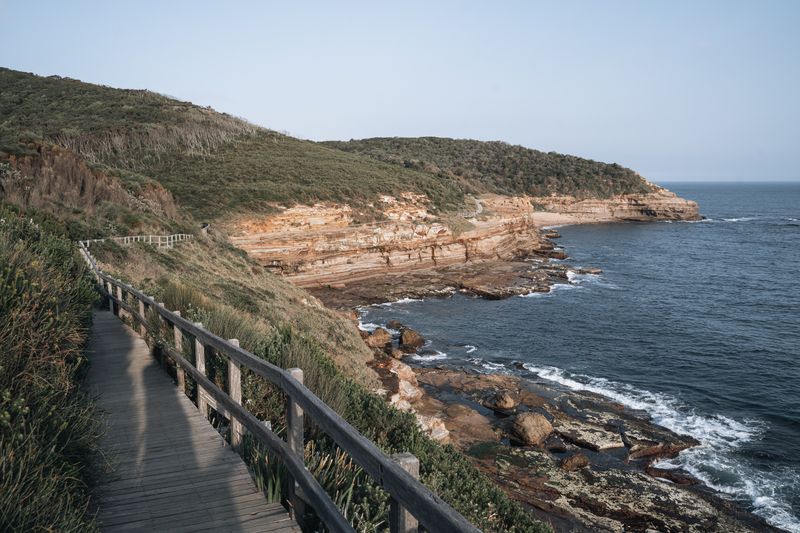
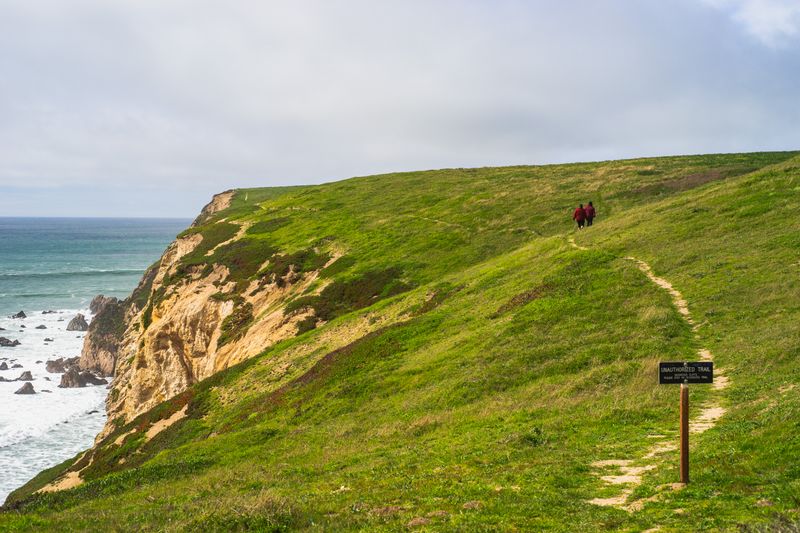
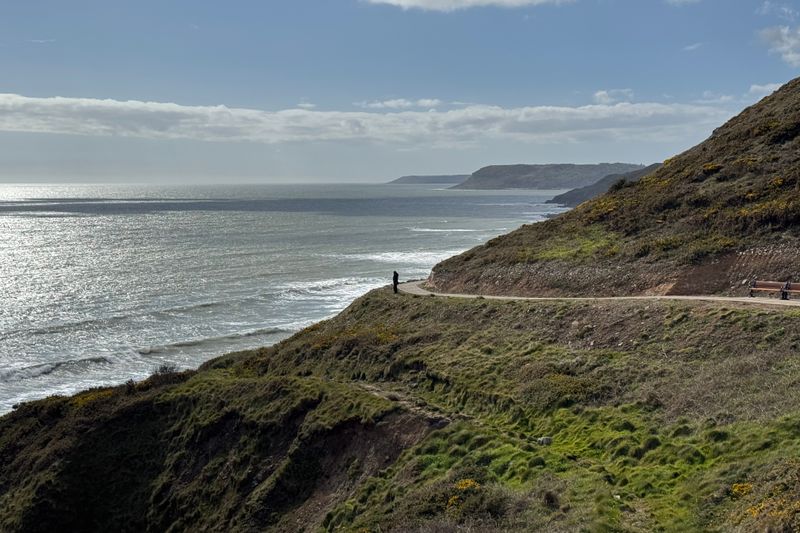
With no rivers arriving, there is little sediment supply, so beaches are often coarse and cliffs are stark and dust-covered. The sea is usually the cold, productive kind, which means fog, seabirds, seals and a substantial fishing industry.
Surf on these exposed coasts can be large, and the water is cold enough to provoke the cold shock response on entry. Salt pans, guano deposits and wind-carved rock take the place of the dunes and marshes of a wetter coast.
Local lifeguard, harbour or coastguard information is the only reliable guide to what any particular stretch of that water does.
The practical constraints are the trip
Fuel, drinking water and mobile coverage are separated by long distances, and the gaps are the planning problem. Temperature swings between a foggy dawn and a clear afternoon are large, and both ends of that range need clothing.
Shade does not exist naturally on most of these coasts, so midday is spent somewhere you have arranged in advance. Recovery from a mechanical problem is slow because the nearest workshop may be several hours away in either direction. Telling someone your route and your expected arrival is standard practice among people who work on these coasts.
Tides, currents and swell are local knowledge, so ask somebody who swims there.
When these coasts are worth the journey
The light on an arid coast is exceptional in the hour after the fog clears and again as it returns. Wildlife concentrates where the productive cold water meets the shore, and colonies can be very large indeed.
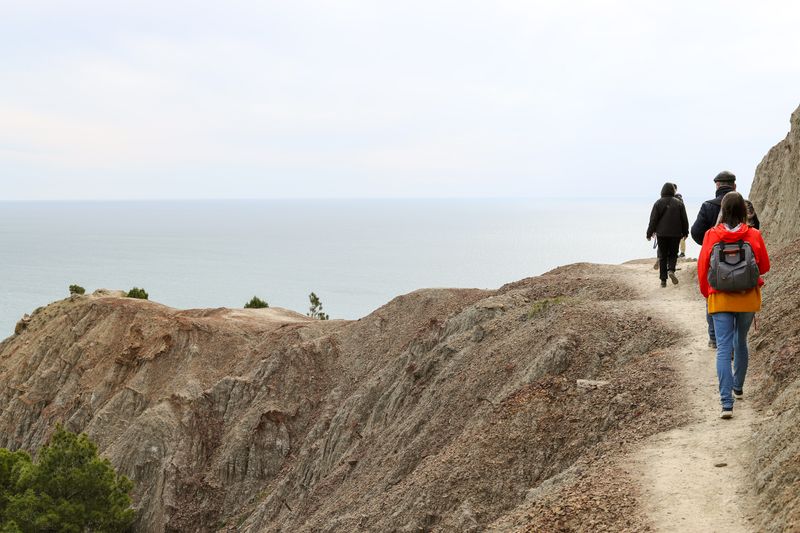
On the water, nothing about the landscape is softened, so the geology is legible in a way it never is on a vegetated coast. The quiet is real, because there are no rivers, no trees and often no settlements for long stretches. It is a coast that rewards slow travel and punishes an itinerary built on average driving speeds.
The takeaway
On an arid coast, plan around fog and fuel rather than around rain, because rain is not the variable.
Arrive a day early. A coastline rarely rewards a tight schedule.
Questions readers ask
Does it ever actually rain on a coastal desert?
Occasionally, and when it does the effect is dramatic because the ground cannot absorb it and dormant plants respond. These events are irregular rather than seasonal, which is why long-term averages describe them poorly.
Why is a desert coast so cold in the morning?
Fog blocks the sun, the sea beneath it is cold, and there is no humidity blanket inland to hold overnight heat. The same place can be twenty degrees warmer a few hours later once the fog clears.