Coastlines
Volcanic Coasts Drop Away Fast and the Rock Explains Why
Dark sand, sudden depth and a shoreline that was made recently rather than worn down slowly over millions of years.

What follows is an argument about volcanic island shorelines, and about where the received version of it stops being true.
The argument in brief
- Dark sand is ground-up basalt and it heats far more than pale sand does.
- Young volcanic coasts have little continental shelf, so deep water starts close in.
- Lava benches and undercut ledges are new ground and are not structurally reliable.
Why the sand is black or grey
Basalt is a dark, iron-rich rock, and when the sea grinds it down the resulting sand keeps that colour. Green sand occurs where the lava contained enough olivine crystals for them to survive the grinding and concentrate on the beach. Dark sand absorbs far more solar radiation than pale carbonate sand, so the surface can become genuinely painful to walk on.
That is a straightforward physical difference rather than a curiosity, and it changes what time of day a beach is usable. It also means the sand cools quickly once the sun goes off it, which is why evenings on such beaches feel different.
A coast made yesterday in geological terms
An old continental coast sits on a wide, shallow shelf built up over an enormous span of time by sediment and subsidence. A young volcanic island has barely any shelf, because the cone rises steeply from the sea floor and the sea has not had long to plane it.
The practical consequence is that deep water can start within a very short distance of the waterline. Waves that would break far offshore on a shelving coast instead arrive close in and break heavily onto a steep face. That steepness is why volcanic beaches so often have a pronounced shore break and a strong backwash down the slope.
Lava benches and the ground that is not finished
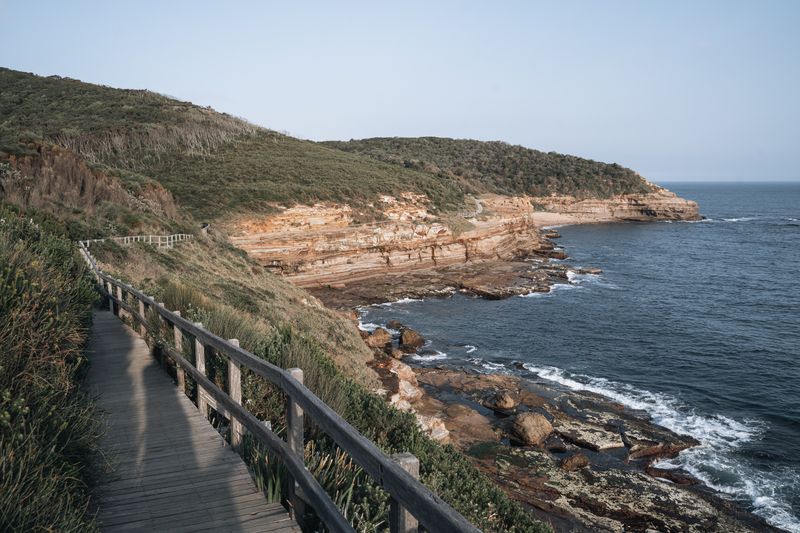
Where lava has recently entered the sea, the new ground is a bench of rubble and crust resting on unstable material. Benches like these can collapse into the sea without warning, and they do so on a timescale of years rather than eras. Older flows form cliffs, sea arches and blowholes, because the sea exploits the cooling cracks that run through the rock.
Along that stretch of coast, a blowhole works by compressing air and water in a confined cave, which is why its behaviour changes completely with swell size. Access to active or recently active coastlines is normally controlled locally, and those closures reflect specific and current hazards.
Rock that is sharp in two different ways
Rough clinkery lava has an edge like broken glass and shreds skin, footwear and inflatable boats on contact. Smooth ropy lava looks benign but forms thin crusts over voids, so a foot can go through into a cavity. Both types weather into ankle-breaking ground, and neither offers the friction people expect once salt spray has wetted it.
This is why coastal walking on volcanic islands is slow and why cross-country shortcuts on lava fields go badly.
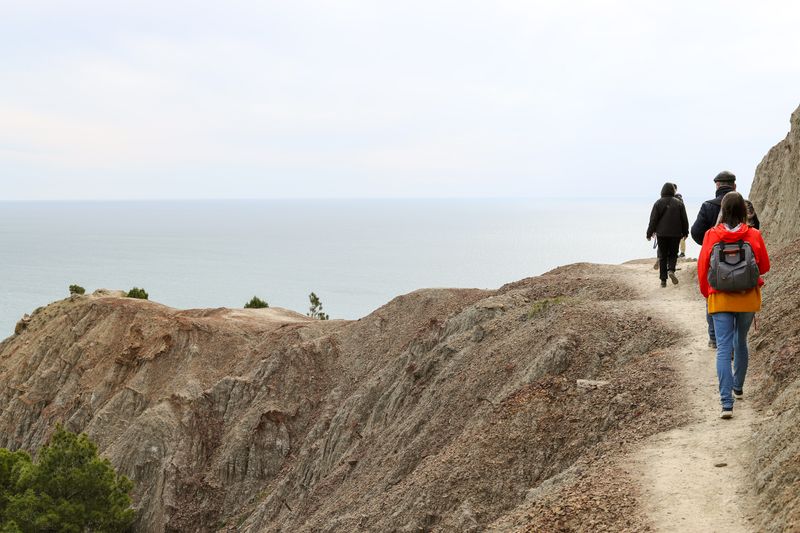
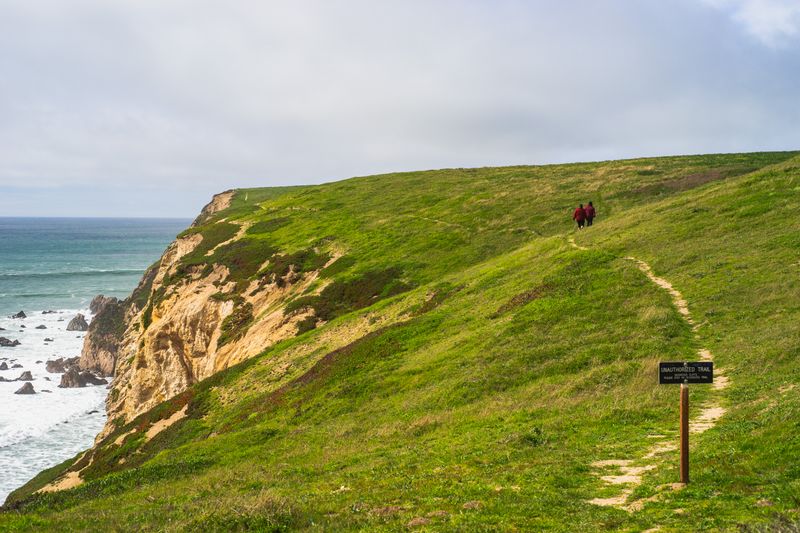
Marked paths on these coasts exist because someone has worked out which ground holds and which does not.
Water that behaves like the coast it meets
Because deep water lies close inshore, swell arrives with little warning and with little shallow ground to sap its energy. Backwash off a steep dark beach can be strong enough to move standing adults off their feet as it drains. Rocky entries surge up and down with each swell, so the height of the ledge above the water changes constantly.
Along that stretch of coast, none of this makes a place uniformly dangerous or uniformly benign; it makes conditions extremely site specific and day specific. Local lifeguard services, harbour offices and posted coastal information are the right source for any particular stretch of that coast.
What this means for a trip
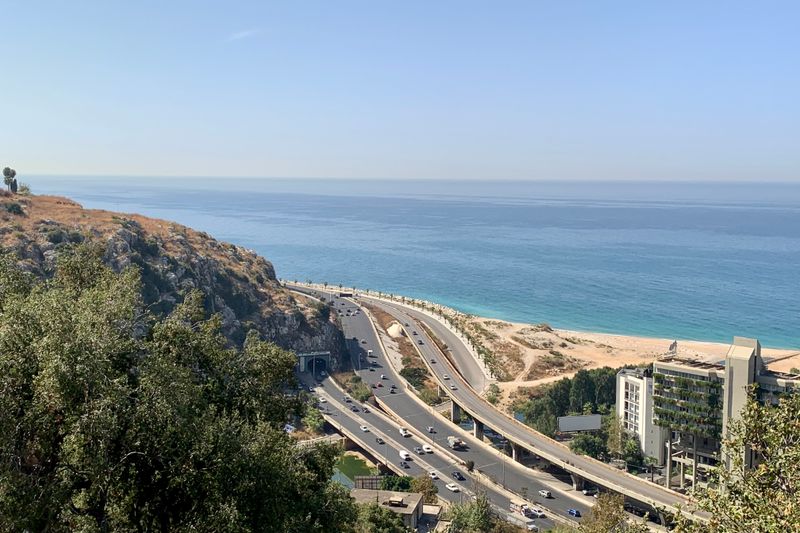
Volcanic coasts reward early starts, because heat on dark ground and the afternoon sea breeze both build through the day. The interesting shoreline is often the youngest, and the youngest is exactly the ground most likely to be restricted. Roads may run high above the coast because there is no flat ground beside it, adding descents to every visit.
Freshwater is frequently scarce on young volcanic islands, since porous rock lets rain sink rather than run in streams. Understanding those constraints in advance turns a frustrating day into an itinerary that fits the shape of the island.
The takeaway
On a volcanic coast, treat both the ground and the water as recently made and locally variable.
Arrive a day early. A coastline rarely rewards a tight schedule.
Questions readers ask
Is dark sand always volcanic?
Not always. Dark sand can also come from eroded slate, basaltic dykes on an otherwise pale coast, or heavy mineral concentration by waves. On an oceanic island, though, ground-down basalt is the usual explanation.
Why do volcanic islands have so few natural harbours?
A steep, recently built coast has few drowned valleys and little sheltered indentation. Many ports on such islands are man-made basins behind long breakwaters rather than natural inlets, which is why they are expensive to maintain.