Harbour Towns
Why Old Harbour Streets Are Narrow and Run Steeply
The lanes behind a quay were sized for people carrying loads on ground too steep to build on comfortably, which explains the parking problem centuries later.

The streets immediately behind an old quay are narrow, steep and often stepped. They were built to a specification that had nothing to do with vehicles.
Flat land beside a harbour is rare
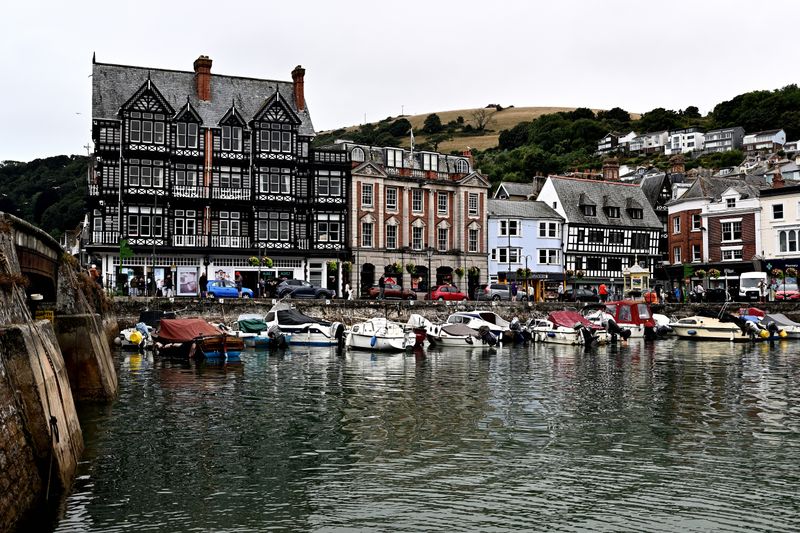
A harbour needs shelter, which usually means a bay enclosed by high ground. The consequence is that the town has to be built on the slope behind it.
Level ground is therefore reserved for the functions that require it: the quay, the market space, and the buildings that handled the catch.
Housing takes what is left, which is why dwellings climb the hill in terraces and why the upper town can sit a considerable height above the water.
The width was set by what people carried
Goods moved on backs, handcarts and occasionally packhorses. A lane wide enough for two loaded people to pass was sufficient and any wider was wasted land.
Land was expensive because it was scarce and had to be sheltered, so buildings crowd against each other and the gaps between them are minimal.
Steps were an acceptable solution for the same reason, since a stepped route climbs a slope in less horizontal distance than a ramp does.
The shape also managed weather
Narrow lanes running across the slope rather than straight up it reduce the wind funnelling in from the harbour mouth.
Closely packed buildings shelter each other, and the high walls keep the lanes shaded in summer and out of the worst of the driven rain in winter.
Where a street does run straight down to the water, it is usually a deliberate access route, and it is typically the windiest place in the town.
Cars never fitted and never will
Most of these lanes cannot be widened without demolition, and many are too steep for comfortable driving even where a vehicle physically fits.
Deliveries, refuse collection and emergency access are therefore constant problems, usually solved with small vehicles, restricted hours and a great deal of reversing.
Visitor parking is pushed to the edge of town, uphill, and the walk back with luggage is the part that most people underestimate when booking.
What this means for choosing a room
Distance on a map is misleading here, because a few hundred metres can involve a substantial climb and several flights of steps.
Properties described as being in the old town are frequently reached only on foot, and the last section may be a stepped lane rather than a street.
The useful question before booking is not how far from the harbour but how far above it, and whether a vehicle can get within reach of the door.
Questions readers ask
When is the best time to watch a harbour working?
Usually early morning, but the specific hour depends on the tidal window and the market. Ask locally rather than assuming, since the time shifts through the month.
Can I buy fish directly from a boat?
Sometimes, where local rules permit and the port has arrangements for it. In many places direct sales are restricted, so a harbour shop or cooperative is the reliable route.