Seasons & Weather
Autumn Storms Arrive on a Sea That Is Still Holding Summer
The ocean reaches its warmest long after the air does, so the first serious depressions of the season cross water that is still full of heat.

Everything here earned its place by changing an outcome. Nothing about sea surface temperature and storm season is included to round the number up.
What matters most
- Sea surface temperature peaks well after the peak of solar heating.
- Warm sea and cooling air increase instability in the lower atmosphere.
- Autumn combines large swell with the larger tidal ranges of certain weeks.
The sea runs on a delayed calendar
Water has an enormous heat capacity, so the ocean warms slowly through spring and summer and keeps warming after the days shorten. The result is a sea surface temperature that peaks weeks after the longest day, well into the second half of the year.
Meanwhile the atmosphere cools quickly once the sun angle drops, because air holds very little heat by comparison. Autumn is therefore the season when the contrast between a warm sea and a cooling atmosphere is at its largest. That contrast is not a curiosity; it is the ingredient that makes autumn weather on a coast behave as it does.
Why the contrast matters
Warm water evaporates readily, loading the air above it with moisture and with the latent heat that moisture carries. Cold air arriving over that warm surface is heated from below, which makes the lower atmosphere unstable. Instability produces deep convection, so autumn brings vigorous showers and thunderstorms over the sea itself.
Depressions crossing warm water have more energy available to them than the same system over a cold sea. This is a general mechanism rather than a prediction, and how much it matters varies enormously between coasts.
Where the swell comes from
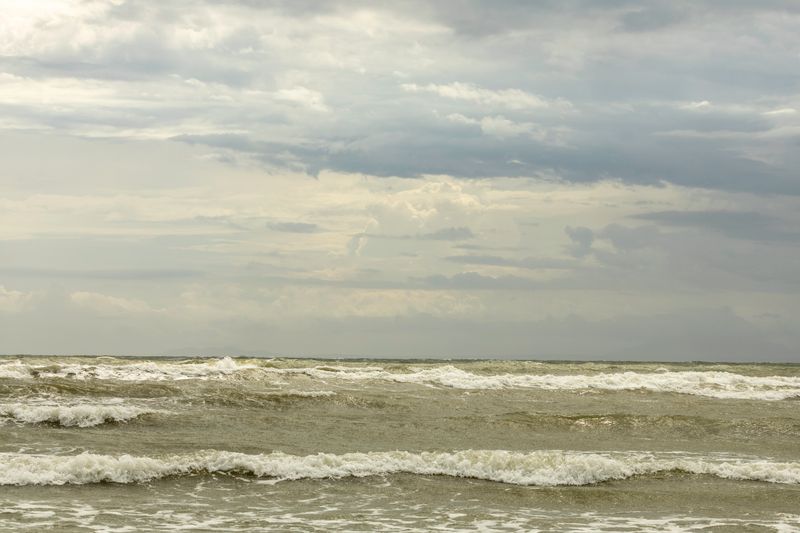
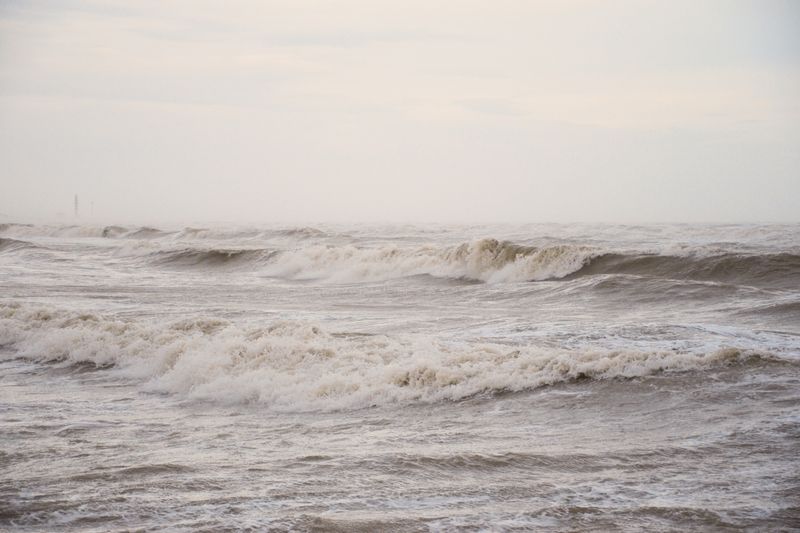
Deep autumn lows generate large seas over long fetches, and that energy radiates outward as swell. Swell travels far faster than the storm system, so it can arrive on a coast under clear skies days before or after. Autumn therefore produces some of the largest swells of the year on coasts facing the relevant ocean.
With the tide out, the waves are often long period, which means they reach much further up a shore than their height suggests. Coastal impact is greatest when a big swell coincides with one of the larger tidal ranges of the month.
Night storms over the water
Land cools rapidly overnight while the sea does not, so in autumn the sea is often the warmer surface after dark. That reverses the summer pattern, and convection develops over the water at night rather than over the land in the afternoon.
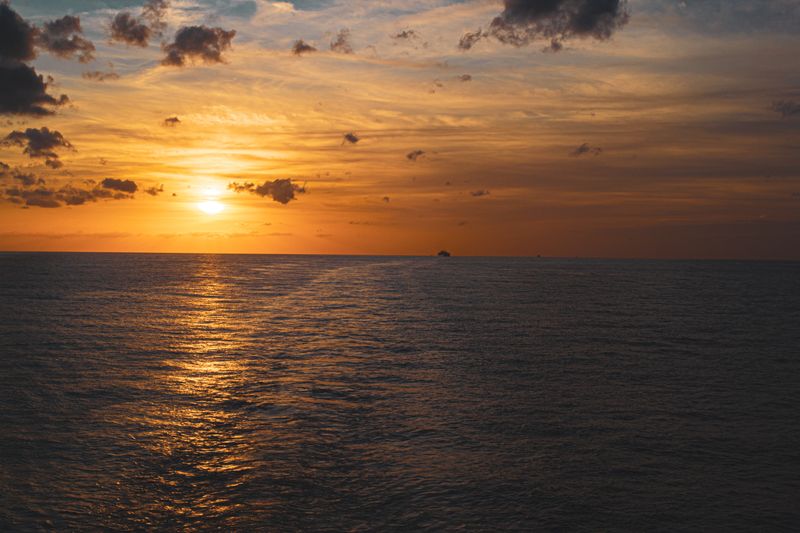
Before the first ferry, the visible result is thunderstorms offshore in the small hours, seen from the coast as light on the horizon. Those systems can drift ashore near dawn, which is why autumn mornings can start with a squall and clear by ten. The same warm sea keeps coastal nights milder than nights a short distance inland at the same time of year.
What an autumn coastal trip is like
Settled anticyclonic spells in autumn are among the best coastal weather of the year, with warm water and low sun. They are punctuated by fast-moving lows that can close paths, cancel sailings and reorganise a week at short notice. The transition between the two happens in a day, so an autumn itinerary has to be able to absorb it.
Out of season, services are winding down at the same time, so a weather delay lands on a coast with fewer options than in August. Booking with flexibility, and with a plan for a day indoors, converts most of that into a manageable inconvenience.
Following the pattern rather than the day
Looking at the synoptic pattern several days out shows whether a settled block or a run of lows is arriving. Wave models show swell building before any wind arrives locally, which is the most useful early signal on a coast.
On the water, national warning services publish criteria for wind, rain and coastal impact, and those criteria differ by country. Local harbour and lifeguard information translates all of it into what will actually happen at a particular place. Autumn rewards that kind of attention more than any other season, because the range of possible days is so wide.
Everything above, in order of what to do first
- The sea runs on a delayed calendar. Water has an enormous heat capacity, so the ocean warms slowly through spring and summer and keeps warming after the days shorten.
- Why the contrast matters. Warm water evaporates readily, loading the air above it with moisture and with the latent heat that moisture carries.
- Where the swell comes from. Deep autumn lows generate large seas over long fetches, and that energy radiates outward as swell.
- Night storms over the water. Land cools rapidly overnight while the sea does not, so in autumn the sea is often the warmer surface after dark.
- What an autumn coastal trip is like. Settled anticyclonic spells in autumn are among the best coastal weather of the year, with warm water and low sun.
- Following the pattern rather than the day. Looking at the synoptic pattern several days out shows whether a settled block or a run of lows is arriving.
The takeaway
In autumn the sea is still warm, the air is not, and that difference is what writes the weather.
Weather is the itinerary. Everything else is a preference.
Questions readers ask
Why is the sea warmest in early autumn?
Because water heats and cools slowly, so it keeps accumulating heat after the peak of solar input and only begins losing it in earnest once the nights lengthen. The lag is a matter of weeks on most coasts.
Are autumn storms getting stronger?
Storm behaviour varies considerably between years and the picture differs by region, so single seasons prove little. What is clear is that a warmer ocean provides more energy and that sea level rise increases the coastal impact of any given storm.